


From prototype to production, the journey once took two different technologies, two different partners, and a costly technology gap in between. Twenty years ago, 3D printing was a tool for the early stages of product development: a way to visualize an idea, test a component’s ergonomics, or check an assembly before committing to expensive molds.
Today, the same core technologies — Carbon DLS™ and HP Multi Jet Fusion — produce certified, functional parts at industrial scale, from a single prototype to series runs of thousands.
This is the story of how that shift happened at Prototek, told through the projects and technical decisions that made it possible.
From Support Tool to Production Technology
“For a long time, additive manufacturing was considered a support technology: a useful tool for rapid prototyping, to visualize an idea, to accelerate the initial phases of product development,” explains Andrea Barchi, Director of the 3D Production Division at Prototek, part of the Dedem Group since 2019.
Founded in 2006 in Valenza, in the heart of the Piedmont jewelry district, Prototek started with four people focused on the jewelry sector. Over time, the company progressively expanded into technical industries — automotive, aerospace, sporting goods, fashion and footwear, industrial machinery, and automation — following the evolution of the technology itself.
That evolution has a clear inflection point: when 3D printing platforms began to be designed from the outset for producing finished parts, not just prototypes.
“Carbon DLS™ represents the turning point for us,” says Barchi. “It’s a technology designed from the beginning for producing final parts. It offers high surface quality and materials with stable mechanical properties over time.
This allowed us to definitively cross the boundary between prototype and product.”
Why Prototyping and Production Don't Need to Be Separate
One of the most costly inefficiencies in traditional product development is what happens when prototyping and production use different processes. A part prototyped on a desktop FDM machine and then produced by injection moulding never truly represents the final component — different material, different mechanical behaviour, different tolerances.
At Prototek, prototyping and production run on the same certified materials, the same Carbon DLS™ and HP MJF platforms, and the same engineering team.
“Many of our clients come to us for prototyping and stay for production,” Barchi notes. “Once they experience the speed of iteration and the material performance of Carbon DLS™, the decision to scale on the same platform becomes straightforward.”
From prototype to production: in practice, this means a prototype produced at Prototek isn’t an approximation — it’s the final part, produced in smaller quantity, with identical mechanical properties and dimensional tolerances to what will later be manufactured at scale.
Design for Additive Manufacturing: The Engineering Layer Behind Scalability
Moving from prototype to production series isn’t only a matter of machine capacity — it requires a specific design approach.
“Many models arrive designed for traditional technologies like injection moulding or CNC,” explains Barchi. “We intervene to optimise them, adapting them to additive.”
This is Design for Additive Manufacturing (DfAM):
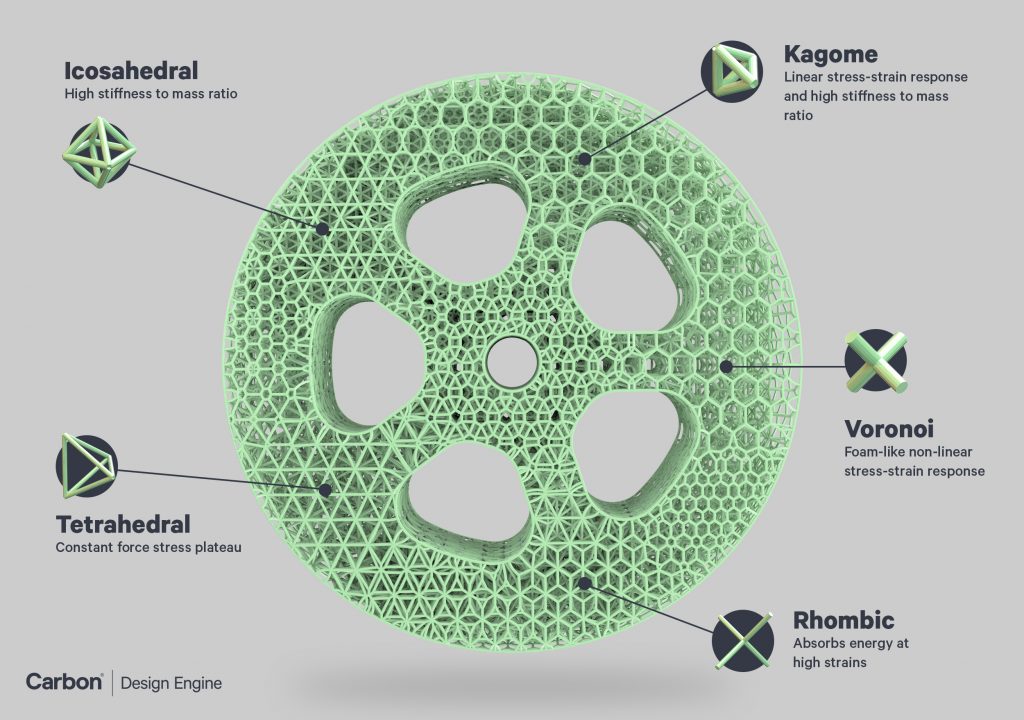
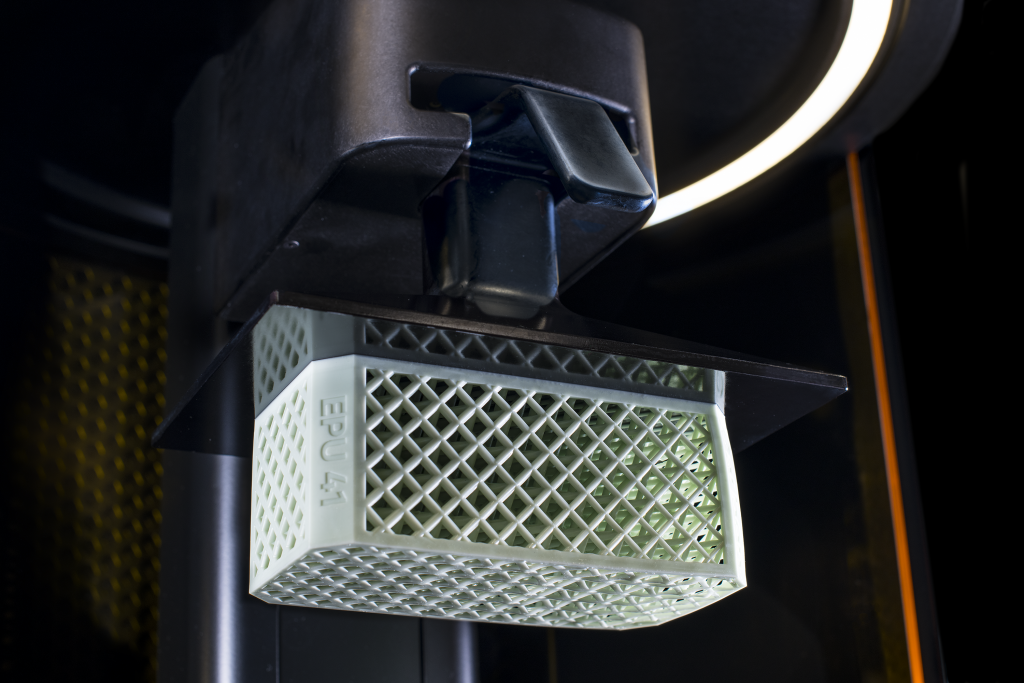
- exploiting lattice structures, internal channels, and part consolidation to reduce weight,
- improve performance, and optimise production cost — geometries that would be difficult or impossible to achieve with traditional methods.
Production Capacity: From Experimental to Structured
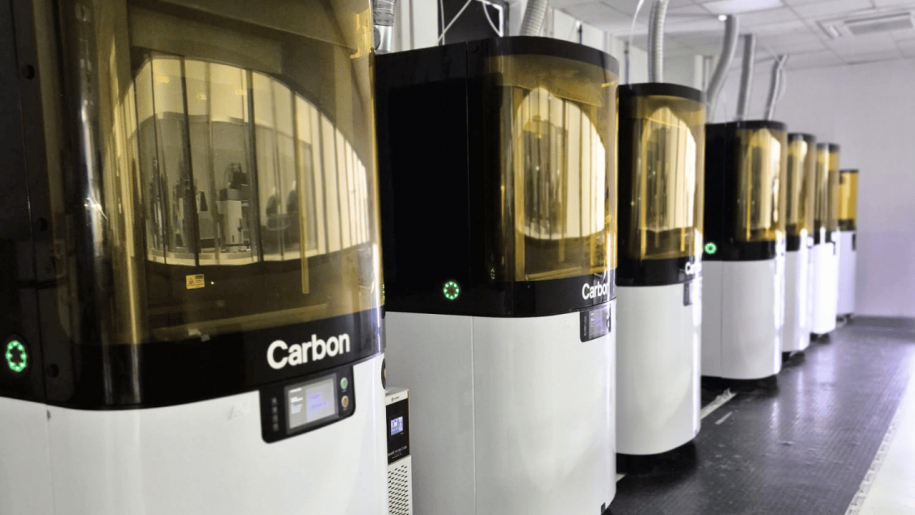
Scalability requires infrastructure. Prototek’s production fleet includes 7 Carbon DLS™ machines, running 24 hours a day, 5 days a week, supporting parallel production runs, standardised post-processing, and integrated quality control across high volumes.
“Having this production capacity radically changes our positioning,” Barchi observes.”We can manage regular batches, guarantee continuity, and respond to international requests.
We’re no longer an experimental laboratory, but a structured production reality.”
Real-World Applications: From Sports Equipment to Industrial Machinery
Sports: Cycling Saddles and Rowing Equipment
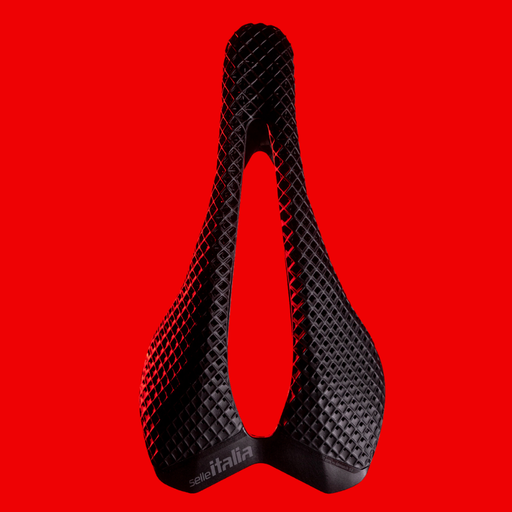
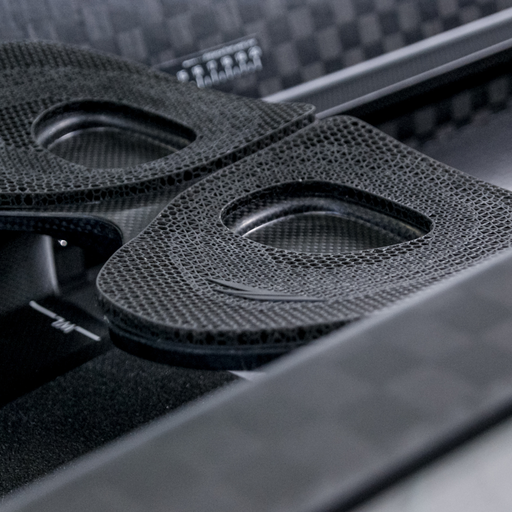
Prototek was among the first companies in Europe to use additive manufacturing to create fully 3D-printed padding for cycling saddles, for Selle Italia. The lattice structure allows stiffness and comfort to be differentiated by zone — a level of performance difficult to achieve with traditional foams.
The same approach applies to the seat pads for Filippi competitive rowing boats, series-produced with Carbon DLS™ technology for lightness, strength, and repeatability.
Industrial Machinery: Functional Components for COMAS - Omnia Technologies Group
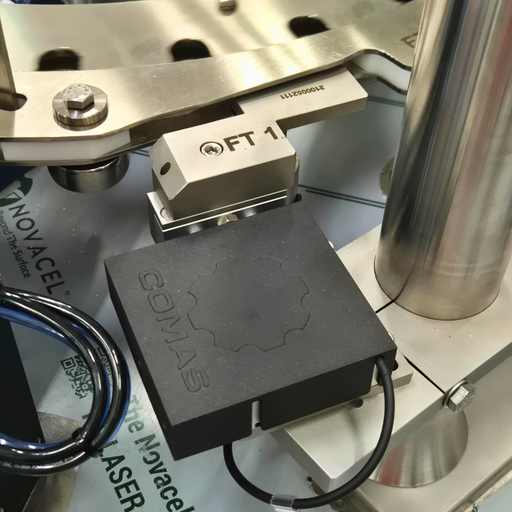
Working with COMAS (part of the OMNIA Technologies Group), which manufactures automation machinery for the beverage, cosmetics, pharmaceutical, and diagnostics industries, Prototek produced critical components in Nylon PA12 via HP Multi Jet Fusion — including anti-rotation devices, dosing bellows, and supports for diagnostic machinery.
Fashion and Design: Alexander Wang's Griphoria Knittel Heels
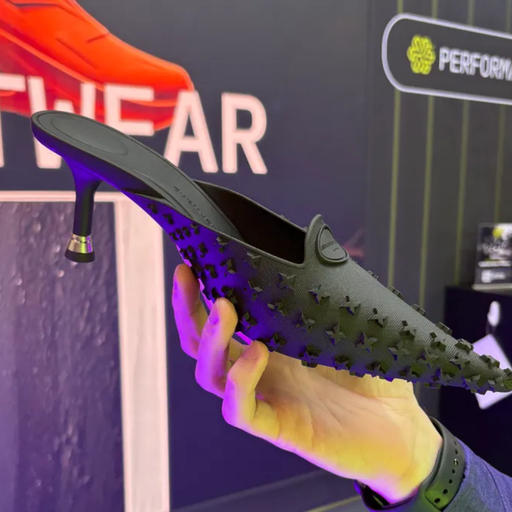
The Griphoria Knittel Heels, produced for Alexander Wang, are the first 3D-printed stiletto made with two Carbon DLS™ resins: EPU 46 for the shoe body and RPU 70 for the heel. Now in production and available on the market, they demonstrate that scalable additive manufacturing can meet high aesthetic requirements without compromising structural performance.
An Engineering Partner, Not Just a Printing Service
“Our job isn’t just to print a file,” Barchi emphasises. “The engineering phase is fundamental. It transforms any object into a component truly designed for 3D printing.”
This is what distinguishes a production partner from a generic 3D printing service:
- technical-economic feasibility analysis,
- DfAM optimisation,
- technology and material selection,
- complete process management — from post-processing to dimensional quality control and full traceability documentation, under ISO 9001 and ISO 27001 certification.
What's Next: Multi-Material and Differentiated Properties
Looking ahead, Prototek is working on multi-material applications and the ability to vary mechanical properties within the same component.
“We haven’t yet achieved total freedom of design and execution,” Barchi notes, “but additive manufacturing already allows us to work on internal structures and stiffness gradients that would be impossible with traditional technologies.”
From a Jewelry Workshop to an Industrial Manufacturing Partner
Prototek’s own trajectory mirrors the story of additive manufacturing itself:
from an artisanal activity focused on the jewelry district, to an industrial reality serving engineering teams across multiple sectors — with the same technologies now supporting everything from a single functional prototype to series production runs of thousands of parts.