


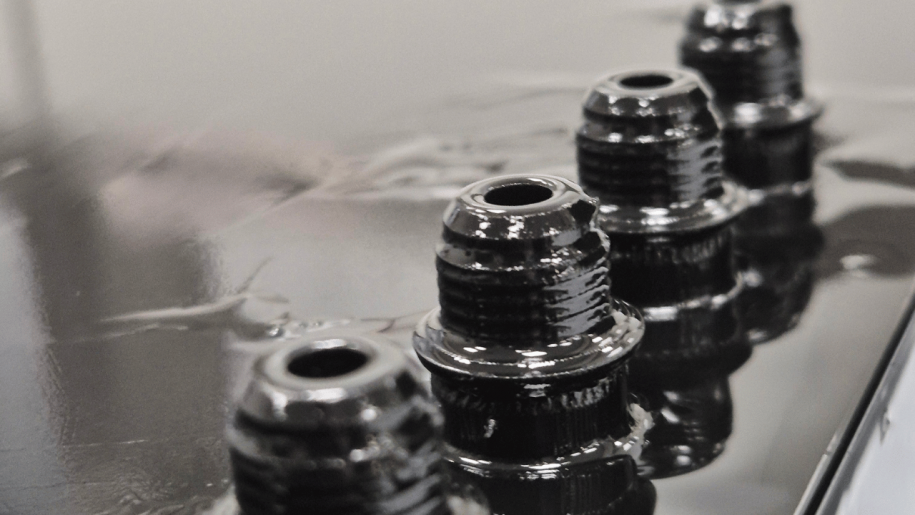
On-demand manufacturing inverts a model industrial companies have relied on for decades: instead of producing in advance and storing the result, the digital file becomes the warehouse.
With Carbon DLS™ and HP Multi Jet Fusion, Prototek delivers certified components — one unit or several thousand — only when they’re actually needed, eliminating the capital, warehouse space, and obsolescence risk tied up in traditional spare parts stock.
The Problem On-Demand Manufacturing Solves
The traditional spare parts model forces manufacturers into a difficult trade-off:
- Produce minimum batch quantities to justify tooling amortisation
- Hold stock for months or years, with associated capital and warehouse costs
- Manage obsolescence risk and disposal of excess inventory
- Sustain fixed costs regardless of actual demand.
On-demand manufacturing removes that trade-off. When a replacement part is needed — one unit, ten, or several hundred — it’s produced to the exact specification of the original, in certified material, without holding physical stock.
This model is already operational across several European industrial sectors:
- Automotive and motorsport: low-volume parts for out-of-production vehicles, jigs, fixtures, and support components
- Industrial machinery and automation: production line spares and custom fixtures produced to order
- Marine and aerospace: certified components for critical environments, manufactured on commission.
The Technologies Behind On-Demand Production
Carbon DLS™ (Digital Light Synthesis™)
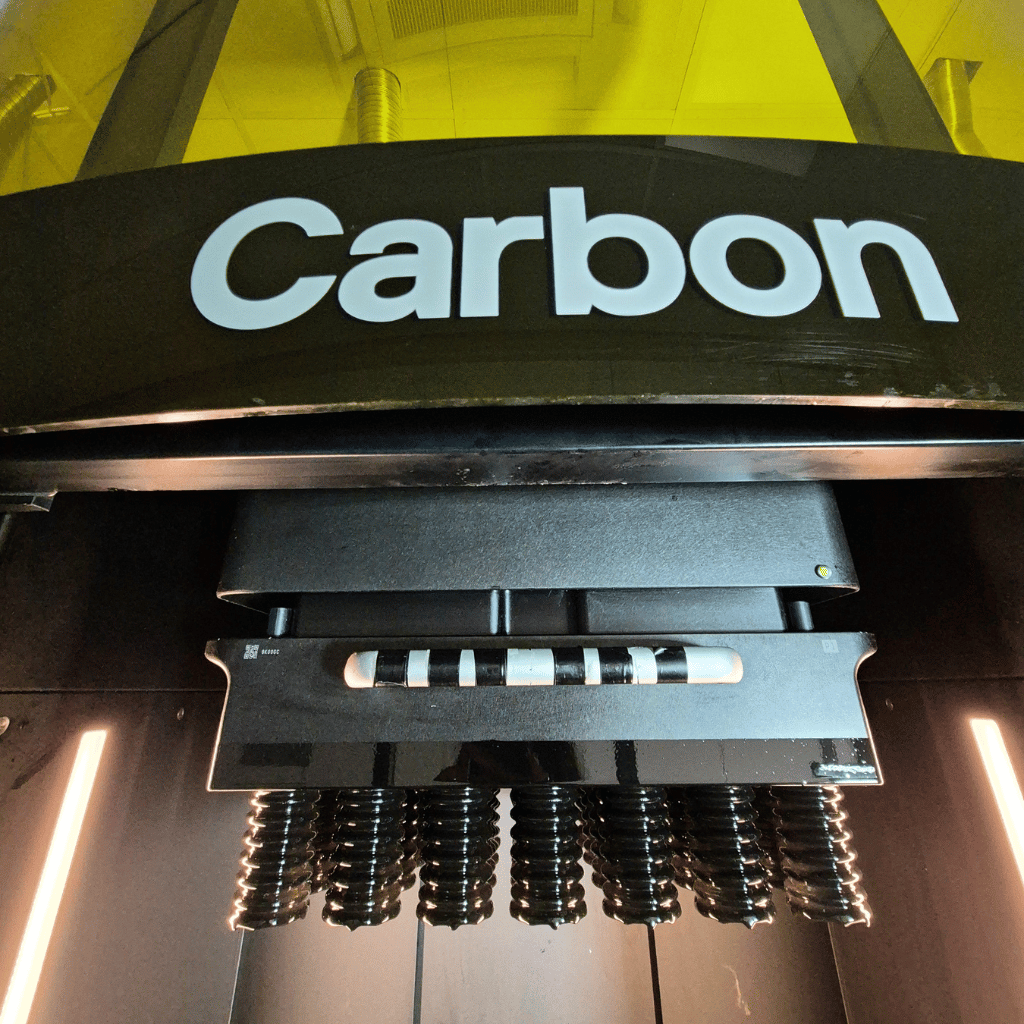
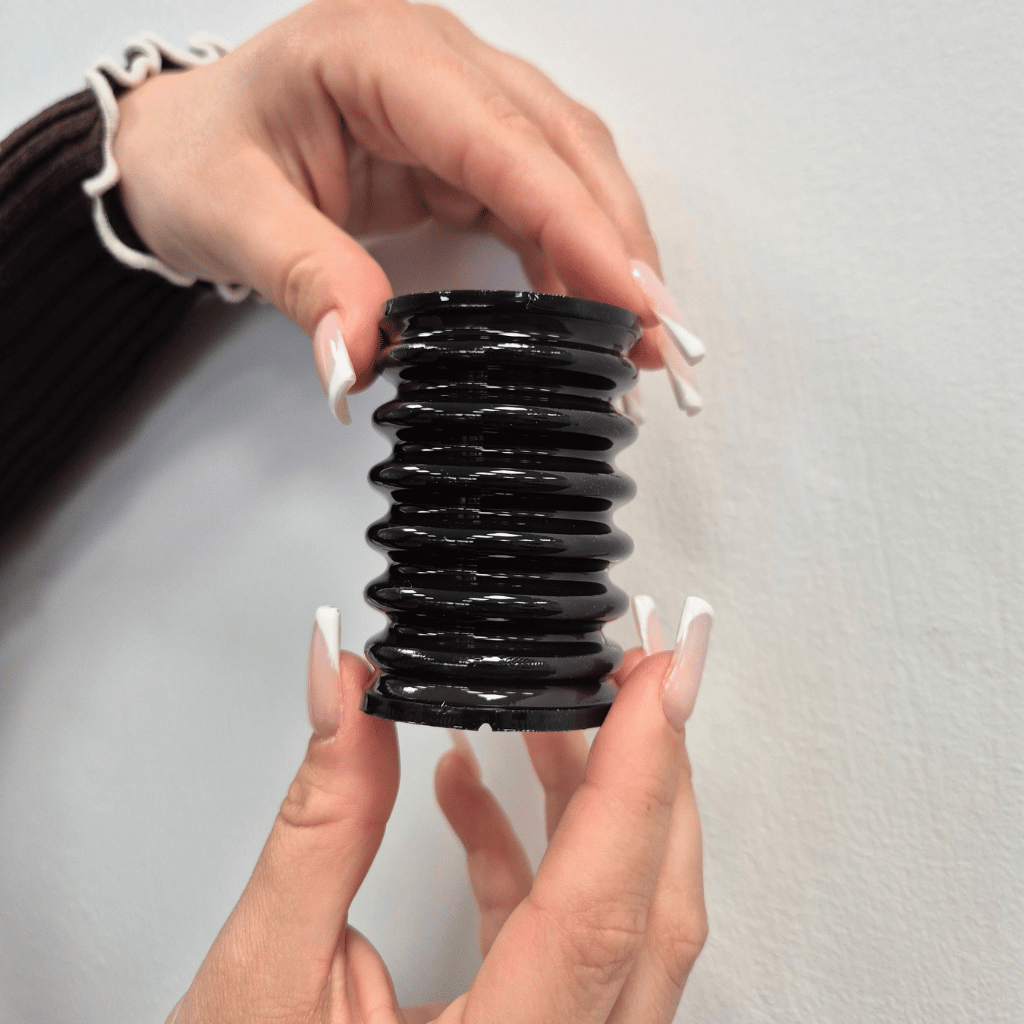
Carbon DLS™ uses light and oxygen to drive continuous resin polymerisation, producing parts with isotropic mechanical properties, a smooth surface finish, and certified materials suitable for industrial applications. Production scales from a single part to thousands within the same digital process.
Prototek works across the full Carbon resin library — EPX rigid epoxy resins, RPU tough polyurethanes, EPU elastomers, and specialty materials such as UMA 90 and LOCTITE® IND405 — all certified and tested, with full technical datasheets available.
HP Multi Jet Fusion (HP MJF)
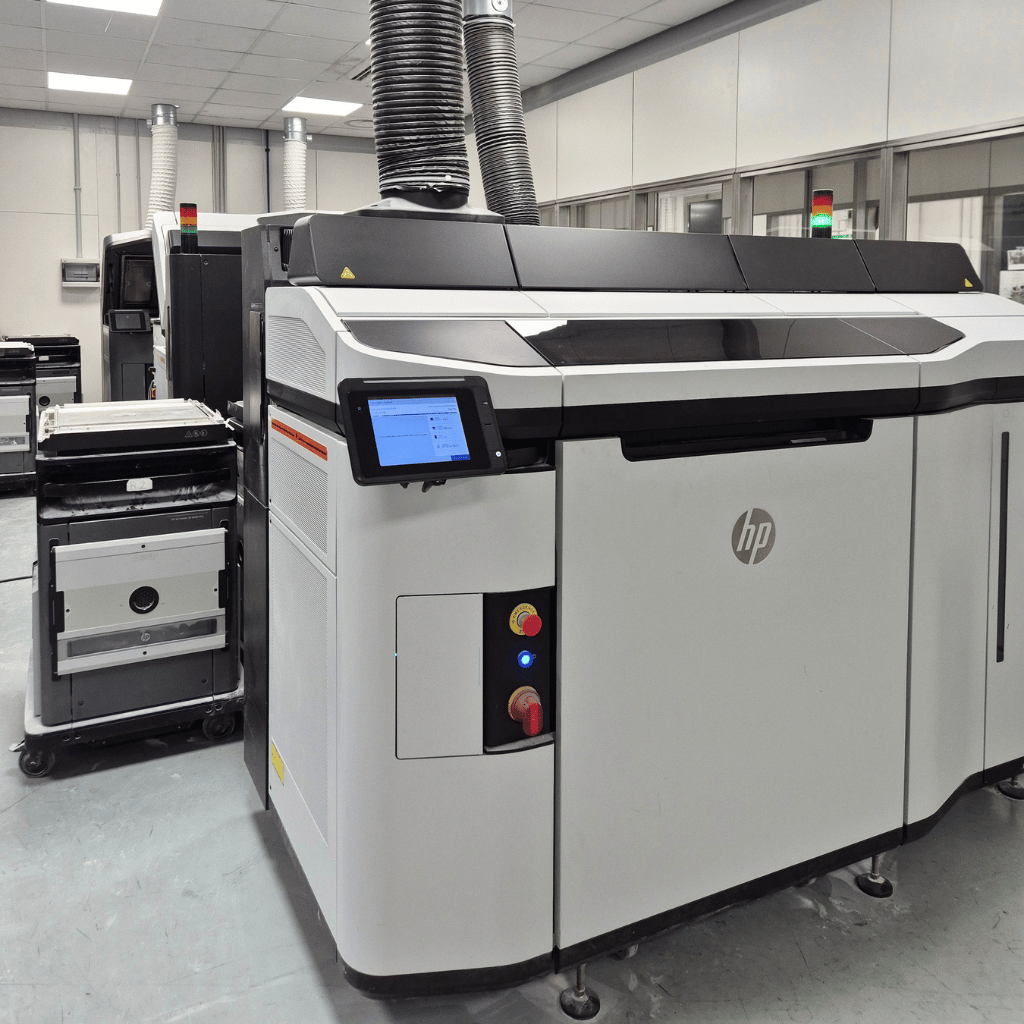
For higher-volume thermoplastic parts, Prototek uses HP MJF with nylon PA12 and TPU. No support structures are required, parts nest within the build volume, and each cycle can produce dozens of components with consistent mechanical properties across the batch — well suited to automotive, footwear, and mechanical component applications.
Designing for On-Demand Production
Producing a part on demand still requires it to be designed correctly for the technology that will make it.
This is the role of Design for Additive Manufacturing (DfAM): optimising geometry, wall thickness, and material distribution around what additive manufacturing can actually do, rather than adapting a part originally designed for injection moulding or CNC machining.
From a Single Prototype to a Certified Production Batch
Prototek’s infrastructure combines Carbon DLS™ and HP Multi Jet Fusion technologies with ISO 9001-certified production management, giving engineering teams a single partner capable of scaling from a validated prototype to a certified batch — without changing technology or supplier.
Every production process is documented and traceable under ISO 9001 procedures: print parameters, material lots, and dimensional inspection data are standardised and recorded on every order, giving clients full traceability from file to finished part.
This workflow already supports the development and production cycles of companies including Selle Italia, Filippi, and OMNIA Technologies — projects where the margin between winning and losing is measured in grams, millimetres, and days.
Sustainability Benefits of On-Demand Manufacturing
Additive manufacturing generates significantly less material waste than CNC machining, since material is deposited only where required rather than removed from a solid block. It also eliminates tooling, which carries its own embodied energy and material cost.
On-demand production for spare parts removes a further environmental cost: warehousing and eventually disposing of obsolete stock, a direct benefit for companies managing long product lifecycles or low-rotation components.
Frequently Asked Questions
Can DfAM be applied to existing components, or only to new designs?
Both. DfAM applies to components designed from scratch and to existing parts redesigned to exploit additive manufacturing. The process begins with a functional analysis of the original component — load paths, assembly constraints, and tolerance requirements — followed by redesign optimised for the target technology and production volume.
How many parts can realistically be produced on demand?
There’s no fixed ceiling. With HP MJF and Carbon DLS™, Prototek produces everything from single functional prototypes to batches of thousands of parts, maintaining certified dimensional consistency across the full run.
How do you guarantee repeatability across separate production runs, months apart?
Every process is documented and traceable under ISO 9001 procedures, with standardized print parameters and material lots, ensuring a part produced today is dimensionally and mechanically consistent with one produced six months earlier.
On-Demand Manufacturing Is Now an Operational Standard
The shift from prototyping to certified, on-demand serial production is no longer a future scenario.
It’s already happening across automotive, aerospace, marine, and industrial machinery manufacturing in Europe.
Companies integrating on-demand manufacturing into both product development and spare parts logistics are removing tooling bottlenecks and building supply chain resilience that compounds over time.
Talk to Our Engineers About Your Project ↓