


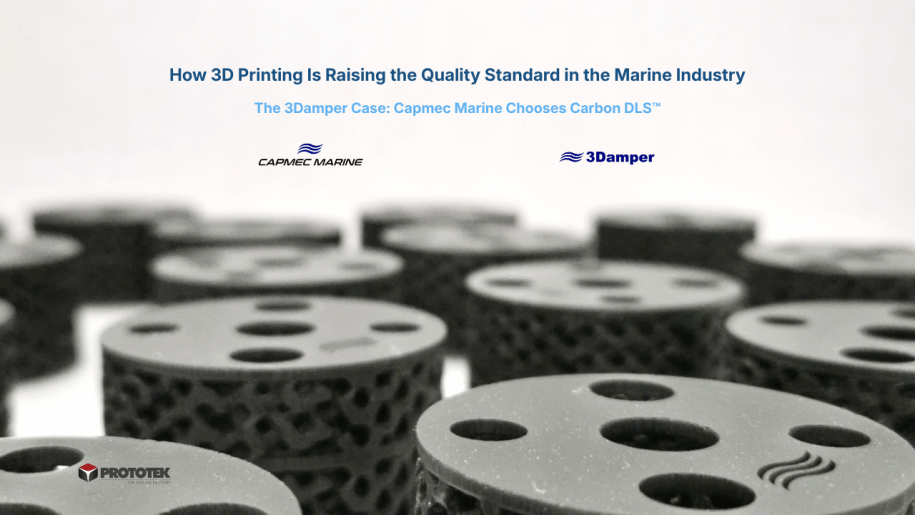
Marine 3D printing is evolving beyond prototyping and becoming a practical manufacturing option for technical components. The 3Damper case, developed by Capmec Marine, shows how additive manufacturing can combine design freedom, surface quality and production consistency in a component designed for recreational boating.
For the production of 3Damper’s elastomeric damping modules, Capmec Marine selected Prototek, Carbon DLS™ and EPU 46, bringing together technical engineering, additive manufacturing and production capabilities.
Capmec Marine: Engineering and Innovation for the Marine Industry
Capmec Marine is a brand dedicated to developing innovative products and solutions for the marine industry.
The project brings together expertise in precision mechanics, technical engineering and a passion for boating, with the aim of developing accessories that combine functionality, reliability, manufacturing quality and design.
Capmec Marine builds on the industrial and manufacturing know-how of Finelli Meccanica, a company with more than 40 years of experience in precision machining and an important technical and production partner in the development of the brand’s products.
This manufacturing background provides the foundation for an innovation-driven approach to recreational boating.
3Damper: A New Generation of Mooring Dampers
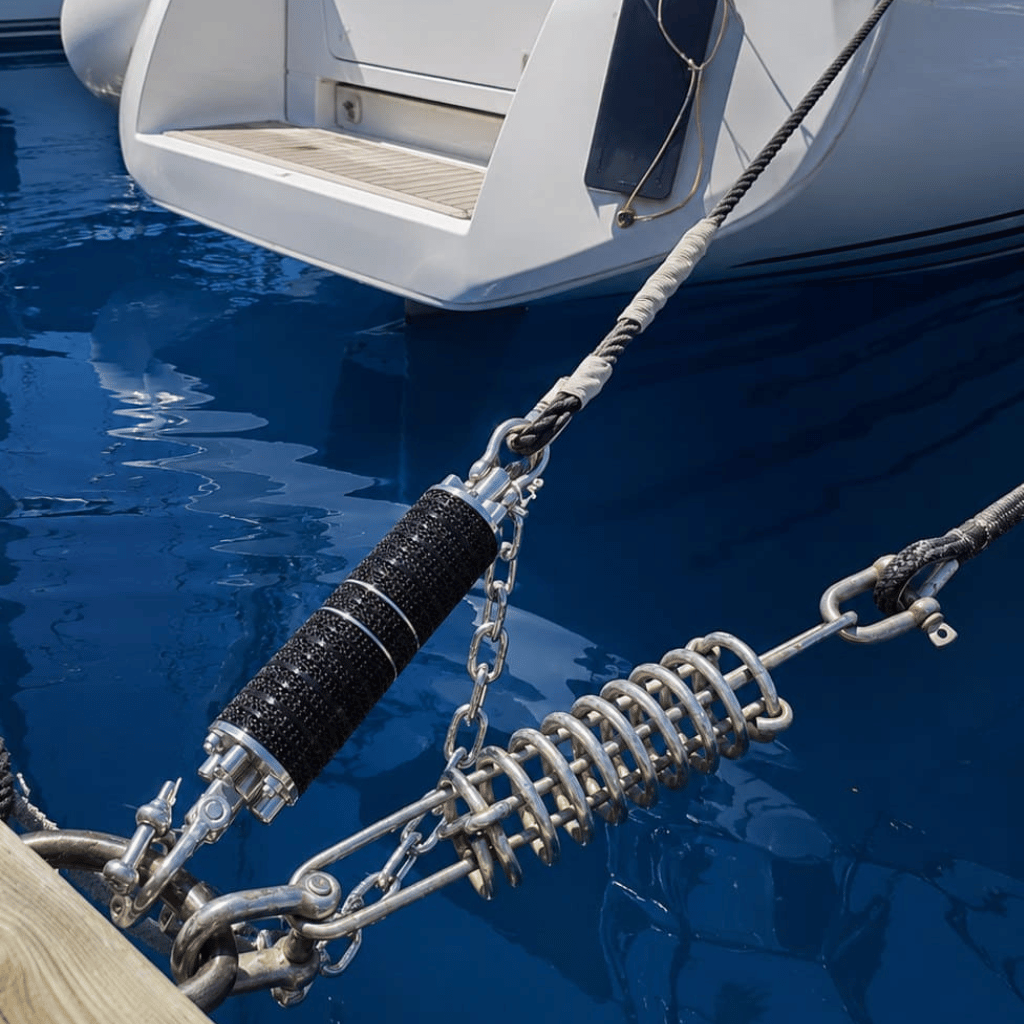
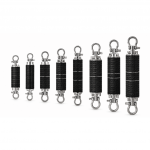
The best product developed by Capmec Marine is 3Damper, a mooring damper designed for recreational boating.
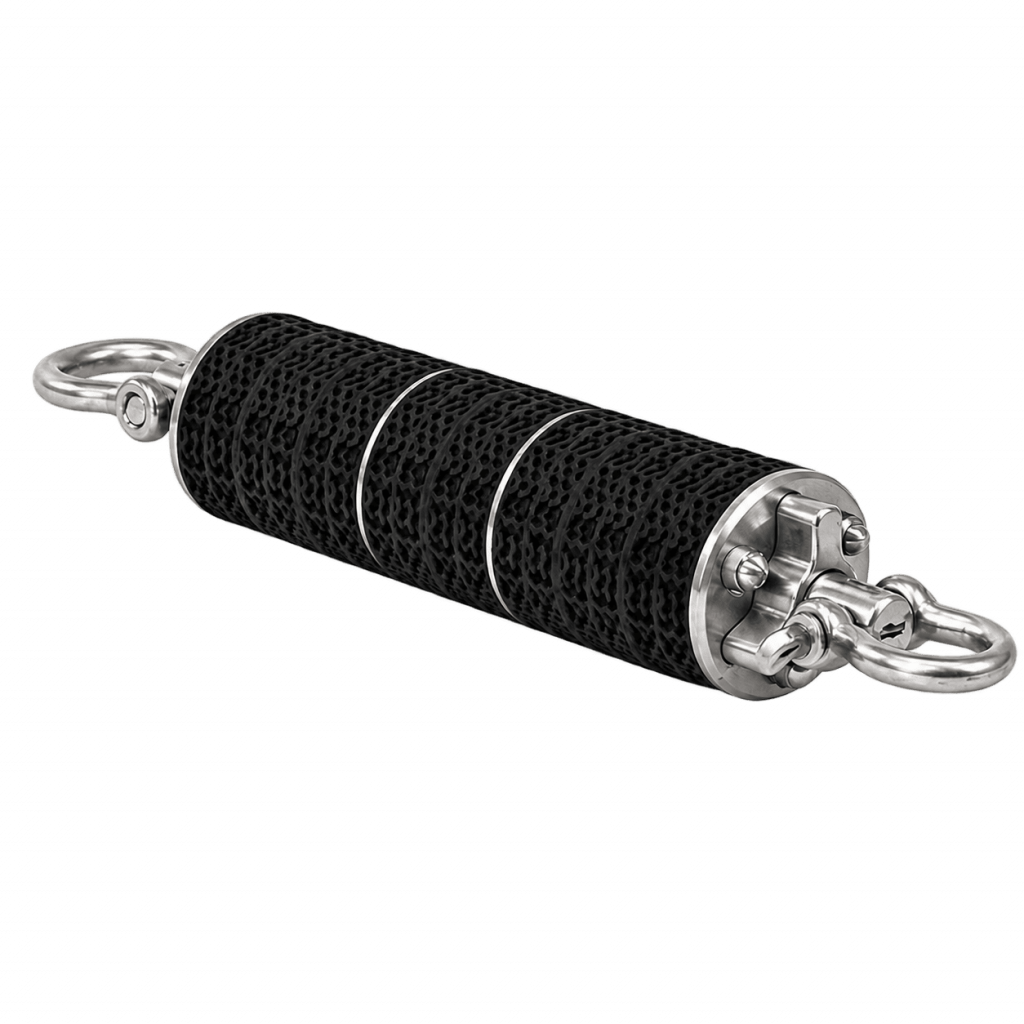
3Damper was developed to rethink a key component used while a boat is moored, with particular attention to absorbing loads transmitted through mooring lines, robustness, ease of use, material and manufacturing quality, compactness and technical design.
The design principle behind 3Damper distributes tensile forces longitudinally along the damper axis, avoiding the torsion associated with traditional metal springs.
The system consists of two main elements:
- AISI 316L stainless-steel structural components, designed to provide high corrosion resistance in marine environments and mechanical reliability;
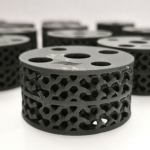
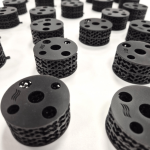
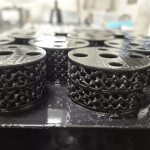
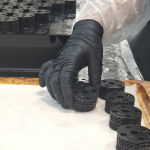
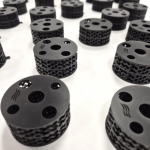
- Elastomeric damping modules featuring an internal gyroid lattice structure and designed to provide a progressive response to mooring-line loads.
The 3Damper range includes four product families — 50, 60, 75 and 100 — designed to meet the requirements of boats across different size and displacement ranges.
The configurations cover vessels from approximately 2–5 tons up to 65 tons and beyond 20 meters in length. Each model is associated with a recommended mooring-line diameter and compatible shackle.
The product is distributed through a marine dealer network currently concentrated in Liguria, Italy, with plans for expansion into other coastal areas.
Capmec Marine has also developed an online configurator that uses boat data and mooring configuration to help boatyards and owners identify the most suitable solution.
Why Marine 3D Printing Is Relevant to the Boating Industry
In recreational boating, component quality is not evaluated on technical performance alone.
Surface finish, design, materials and perceived build quality all contribute to the overall perception of a product and to customer and dealer confidence.
A component that remains visible at the dock and is handled regularly needs to perform aesthetically as well as functionally.
This is where 3D printing for the marine industry can provide an interesting advantage when a product requires functionality, complex geometries and visual quality.
For 3Damper, manufacturing technology was therefore not simply a way to produce the component. It was also part of the product development strategy.
From Steel Springs to a 3D-Printed Elastomeric Module
Moving from a metal-spring-based damping system to a 3D-printed elastomeric module required specific product development and engineering work.
One of the central elements was the internal structure of the module.
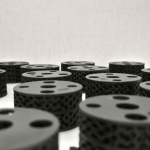
To achieve a progressive elastic response, the design incorporates a gyroid lattice, a three-dimensional geometry made of continuous curved surfaces.
The gyroid lattice allows the component’s response to be engineered through its internal structure. By adjusting geometric parameters such as lattice density and wall thickness, the stiffness of the module can be modified without necessarily changing its external dimensions.
This is one of the key advantages of additive manufacturing for the marine industry compared with conventional molding processes.
With additive manufacturing, the geometry can be modified directly from the CAD file, without requiring a new mold for every design iteration.
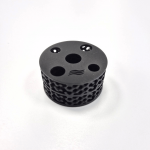
Gyroid Lattice: A Geometry Enabled by Additive Manufacturing
A gyroid structure is particularly relevant for applications requiring complex and controllable internal geometry.
Traditional molding processes impose constraints related to mold design and part removal.
Additive manufacturing, by contrast, can produce more complex internal structures directly from digital data.
In 3Damper, the internal lattice therefore becomes part of the functional architecture of the product.
It is not simply a manufacturing detail: the geometry itself contributes to the way the elastomeric module is designed to respond to applied loads.
Marine 3D Printing: Why Carbon DLS™ and EPU 46?
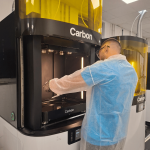
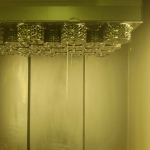
For 3Damper’s elastomeric modules, Capmec Marine selected Carbon DLS™ with EPU 46 resin.
The choice was driven by five main requirements.
1. Surface quality
Carbon DLS™ produces smooth, consistent surfaces without the visible layer lines associated with some additive manufacturing technologies.
For a component designed for the marine market, this supports a level of visual quality consistent with the positioning of 3Damper.
2. Resistance and reliability in marine environments
EPU 46 provides resistance and durability characteristics suited to marine applications, an important consideration for a component exposed to the conditions typically encountered in recreational boating.
The material selection therefore contributes to supporting the reliability of the elastomeric module within its intended application.
3. Production repeatability
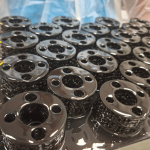
Repeatability becomes particularly important when a product moves from development into production and is distributed through a growing dealer network.
The production process needs to support consistency across different batches of damping modules.
4. Design freedom
Carbon DLS™ enables the production of the module’s internal gyroid lattice, providing a level of geometric freedom that is difficult to achieve through conventional molding.
5. Production without dedicated tooling
Additive manufacturing does not require a dedicated mold.
This is particularly relevant for products in the launch or growth phase, when future production volumes may be difficult to predict and the design may continue to evolve.
Carbon DLS™ vs. Traditional Molding
| Feature | Traditional molding | Carbon DLS™ |
|---|---|---|
| Surface finish | Process- and mold-dependent | Consistent and repeatable |
| Initial investment | Dedicated tooling required | No dedicated mold |
| Design changes | May require tooling changes | Directly from CAD |
| Complex internal geometries | Highly constrained | Complex lattice structures possible |
| Small- and medium-series production | Tooling costs can be limiting | Easier to scale |
| Design iterations | Slower and more expensive | Faster |
| Digital production workflow | Limited | Direct |
The ability to modify the module’s internal geometry and iterate without manufacturing a new mold is particularly valuable during product development.
Prototek's Role in the 3Damper Project
For Capmec Marine, working with qualified technology and manufacturing partners is an important part of the product development process.
The partnership with Prototek brings together complementary expertise, technology and production capabilities in the transition from engineering design to physical production.
For the 3Damper project, Prototek is the production partner for the elastomeric component.
The collaboration includes support in material selection, production development and manufacturing of the EPU 46 modules using Carbon DLS™, together with quality control across production batches.
The project therefore provides a practical example of how engineering, prototyping, additive manufacturing and industrial production can work together to develop a new solution for the marine industry.
From Concept to Product: The Benefits of Additive Manufacturing in Nautical Industry
One of the most relevant aspects of the 3Damper project is the development path from concept to production.
- Faster design iterations: geometry can be modified directly at CAD level without designing and manufacturing a new mold.
- Design freedom: additive manufacturing makes it possible to explore complex internal structures such as the gyroid lattice used in 3Damper’s damping modules.
- Production consistency: the technology can support production of the modules while maintaining consistency across different batches.
- Scalability: production volumes can increase progressively in line with commercial growth, without requiring upfront investment in dedicated tooling.
Greater focus on product development with Marine 3D Printing
By working with a specialized manufacturing partner, Capmec Marine can focus its resources on commercial development, dealer expansion and ongoing product development.
A Partnership Between Marine Innovation and Additive Manufacturing
The 3Damper case demonstrates how marine 3D printing can move beyond prototyping and support the production of technical components for the market.
Capmec Marine brings product-development expertise and an understanding of recreational boating requirements, supported by the manufacturing know-how of Finelli Meccanica.
Prototek contributes additive manufacturing expertise and production capabilities to turn the designed elastomeric component into a producible part.
The result is a partnership built around a straightforward principle: from concept to product, connecting engineering and manufacturing technology to marine innovation.
FAQ: Marine 3D Printing and 3Damper
What are the benefits of 3D printing for the marine industry?
3D printing can provide design freedom, the ability to produce complex geometries, faster design iterations and production without dedicated tooling. These advantages can be particularly relevant for technical components produced in small and medium volumes.
Can 3D printing be used for marine components?
Yes. It can be particularly useful when a component requires complex geometry, customization, design iterations or production volumes that do not necessarily justify upfront tooling investment.
Why was Carbon DLS™ selected for 3Damper?
Carbon DLS™ was selected for its combination of surface quality, production repeatability and geometric freedom required to manufacture the elastomeric damping modules.
What is a gyroid lattice?
A gyroid lattice is a three-dimensional structure made of continuous curved surfaces. In 3Damper’s modules, it is used as an internal structure to engineer and tune the component’s elastic response.
What is EPU 46?
EPU 46 is a polyurethane elastomeric resin from the Carbon material portfolio, used to manufacture 3Damper’s damping modules. Its resistance and durability in marine environments make it suited to the product’s intended application.
What is Prototek’s role in the project?
Prototek is the production partner for 3Damper’s elastomeric component, supporting material selection, Carbon DLS™ production and quality control across production batches.
Can the design of a component be modified after production has started?
One of the advantages of additive manufacturing is the ability to modify the CAD file and implement design changes without producing a new mold. This can simplify product iterations and updates.
Developing a Marine Component?
If you’re considering marine 3D printing for a technical component that requires design freedom, surface quality and repeatable production, the Prototek team can help you evaluate the most suitable technology and material for your project.