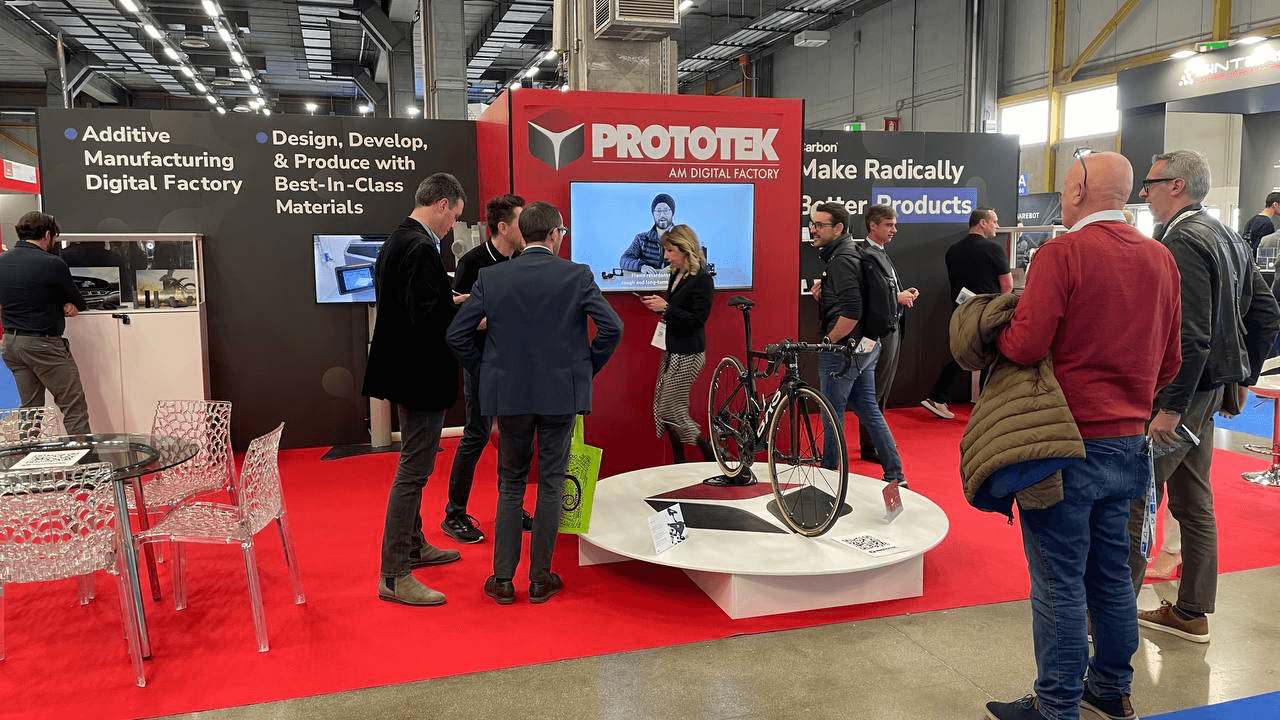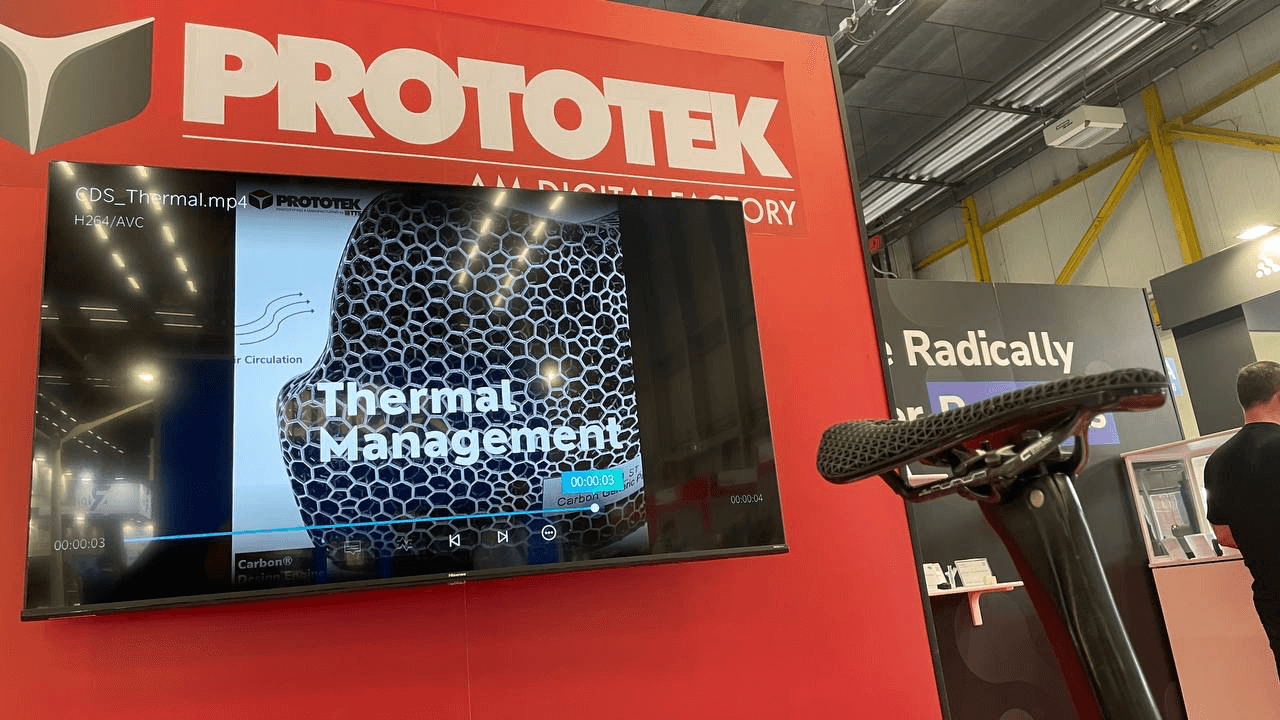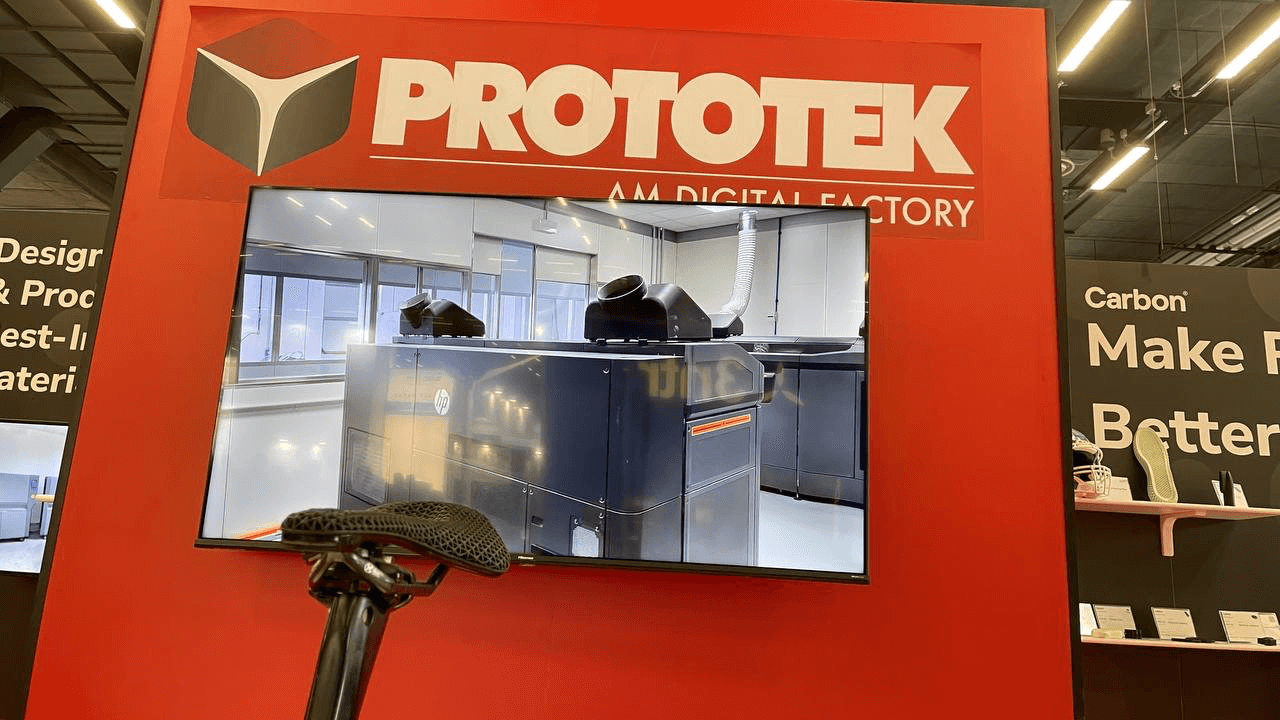
Additive manufacturing is consolidating its strategic role in European industry, moving beyond the experimental phase to establish itself as a concrete production solution. From prototyping to the production of functional components, this technology enables companies to reduce time-to-market, optimize costs, and create complex products tailored to sectors such as automotive, aerospace, medical, and sports.
What Additive Manufacturing Means in Industrial Context
Additive manufacturing is a production process that adds material layer by layer, enabling the creation of complex geometries, lightweight internal structures, and customized components with high precision compared to traditional manufacturing.
In industrial settings, AM is used to accelerate prototyping, optimize design, reduce production times, and create final components with competitive mechanical performance.
European Market Trends 2025–2026
According to the latest data, the European Additive manufacturing market exceeded $4 billion in quarterly revenues in Q3 2025, consolidating steady growth with a projected CAGR of 18% through 2030.
Key points of current trends:
Growth of AM services: AM service bureaus are growing faster than hardware, with companies preferring to rely on external partners for production, post-processing, and technical support.
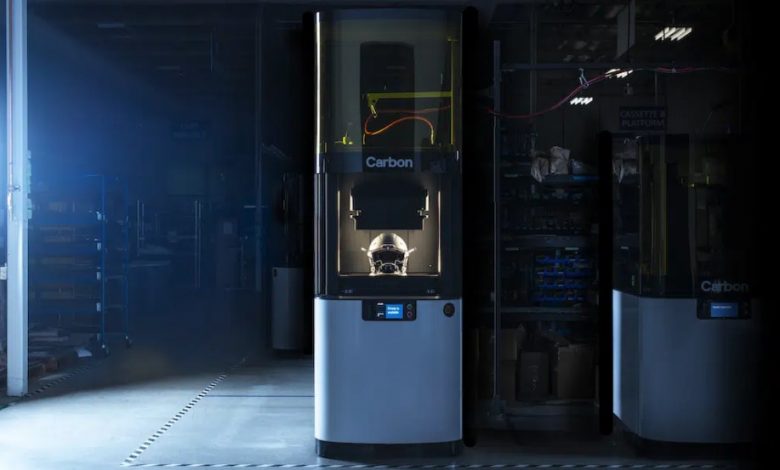
Adoption of advanced polymers and high-performance materials: strong increase in the use of resins and technical polymers for automotive, sports, medical, and fashion, thanks to technologies like Carbon DLS™ (elastomeric EPU and epoxy RPU, EPX resins) and HP MJF (nylon PA12, glass-beads PA12 thermoplastics and TPU). This enables lightweight, resistant, and customized components without yet resorting to metal AM.
Post-volatility stabilization: revenues are more regular compared to previous years, with an increase in concrete industrial applications and third-party services.
Main Benefits of Additive Manufacturing
1. Speed in Product Development
Additive manufacturing enables rapid transition from CAD design to physical component, reducing prototyping and final production times.
2. Design Freedom and Geometric Complexity
Additive production allows creating lightweight internal structures, complex channels, and geometries impossible with traditional methods.
3. Cost Reduction and Material Optimization
On-demand production and targeted material use reduce waste and tooling, making even small series production economically viable.
4. Advanced Customization
Custom parts and specific designs can be created without impacting time or costs.
5. Industrial Sustainability
Reduction of waste, transportation, excessive warehouse inventory, and stock supports ESG strategies and more responsible processes.
Industrial Technologies: Carbon DLS™ and HP Multi Jet Fusion
Carbon DLS™
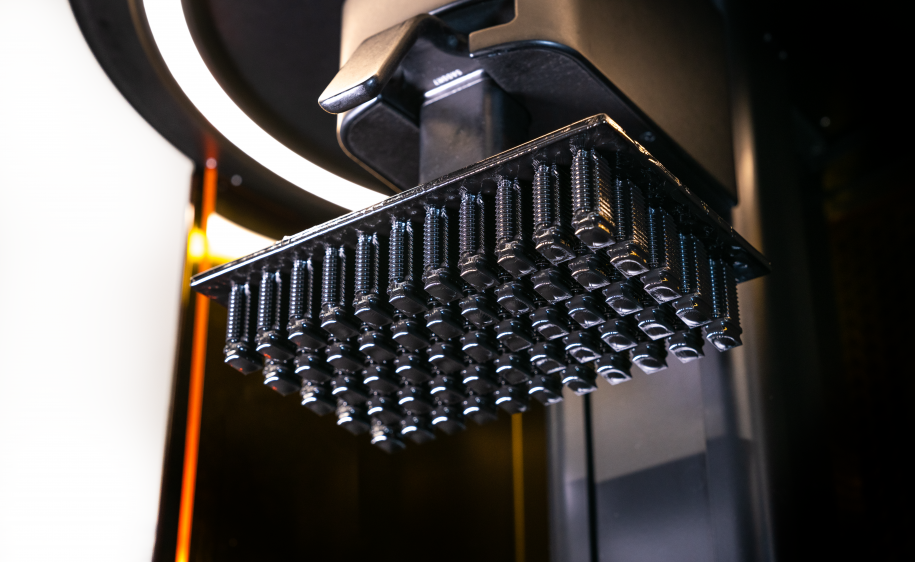
Digital Light Synthesis™ (DLS™) technology combines excellent finishes and high mechanical strength, enabling production of complex, functional, and aesthetic components.
- Filippi: seat pads for competitive rowing boats, with optimization of comfort and impact absorption.
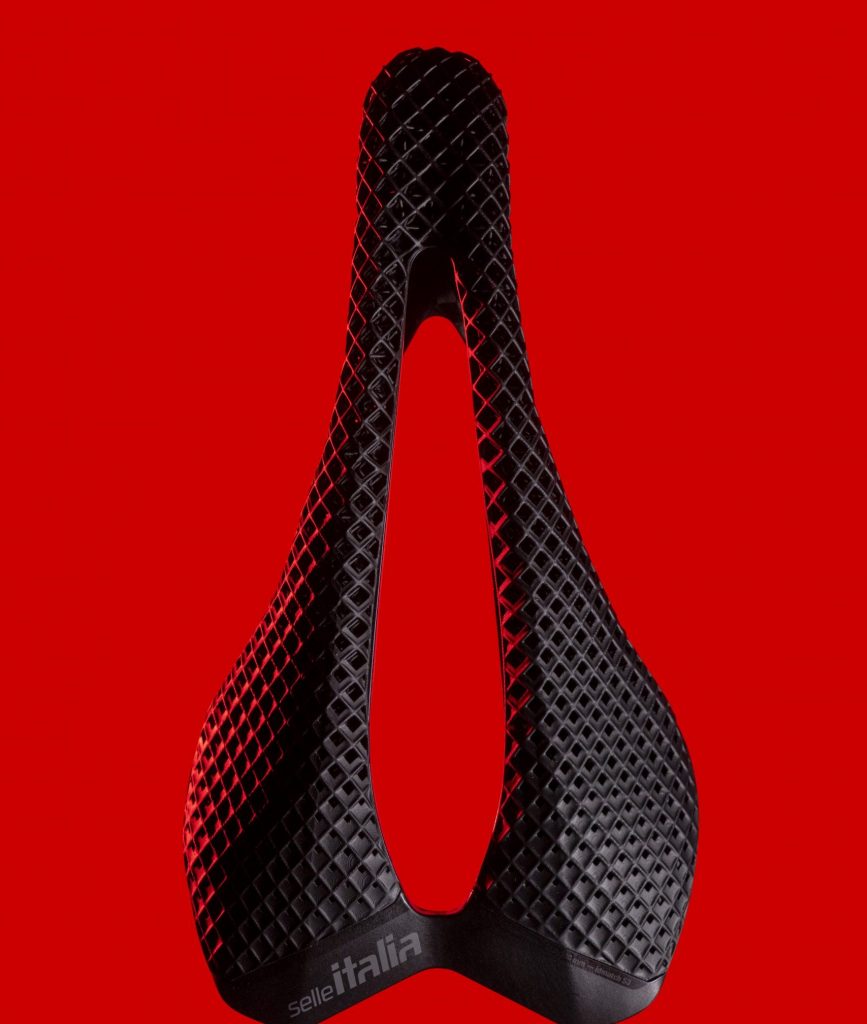
- Selle Italia: padding and ergonomic components for lightweight, high-performance saddles.
- Alexander Wang – Griphoria shoes: 3D-printed heeled shoes with Carbon EPU 46, combining innovative design, lightness, and strength, demonstrating the application of Carbon DLS™ also in fashion and luxury products.
HP Multi Jet Fusion (MJF)
HP MJF enables production of functional parts with high precision and strength.
- OMNIA Technologies: complex industrial components, reduction of time and costs.
- IDM Automation: custom parts, from prototypes to scaling on-demand production.
- Bonzano’s Art Group: aesthetic-functional elements with high structural quality and finishes.
The Strategic Role of Prototek as AM Service Provider
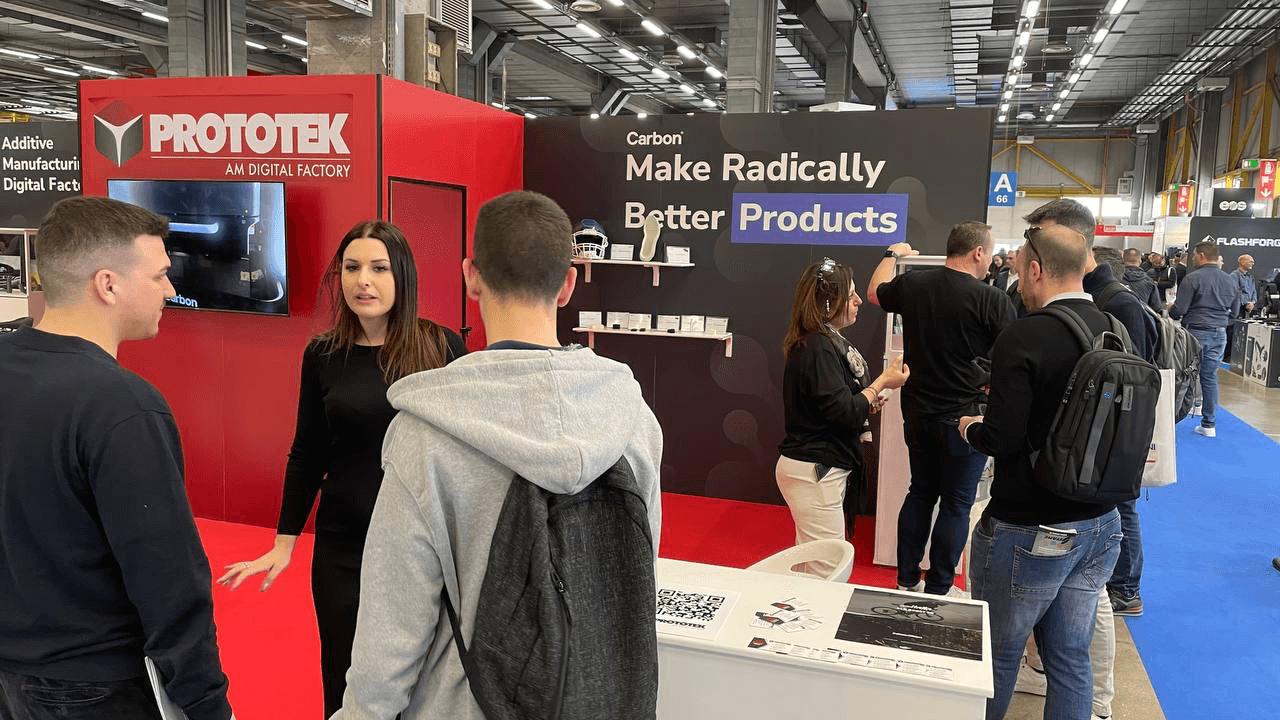
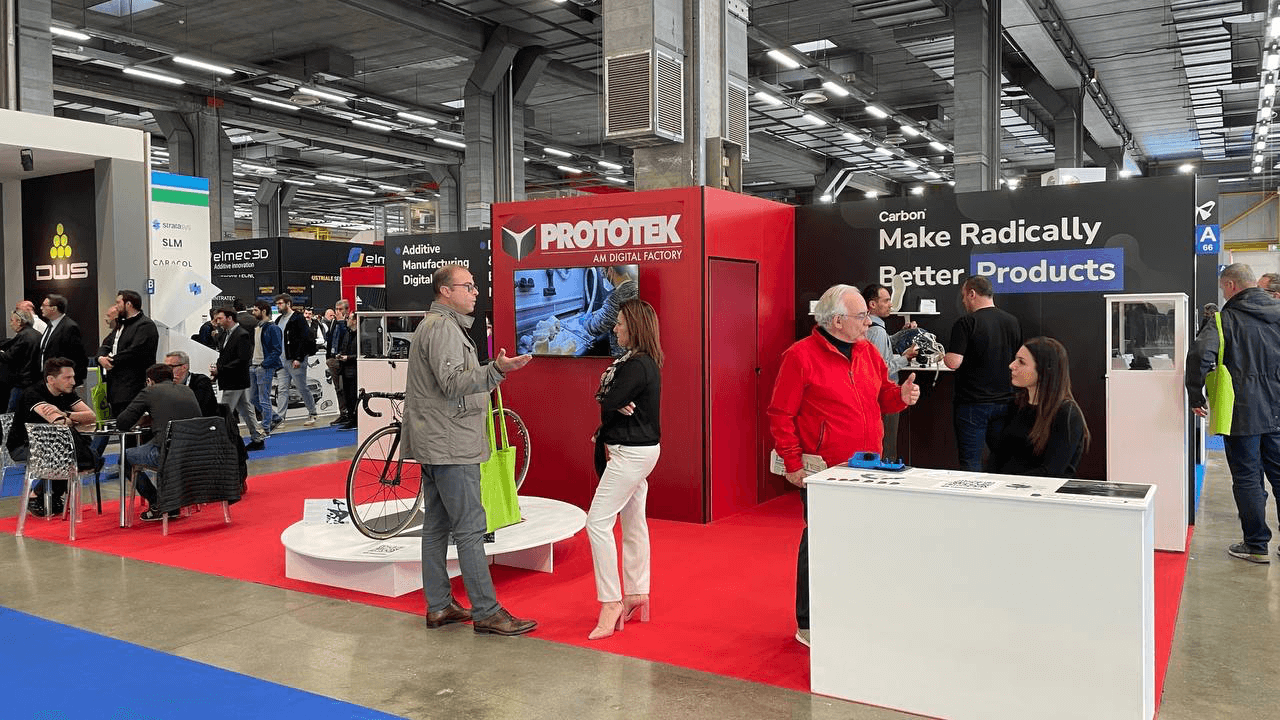
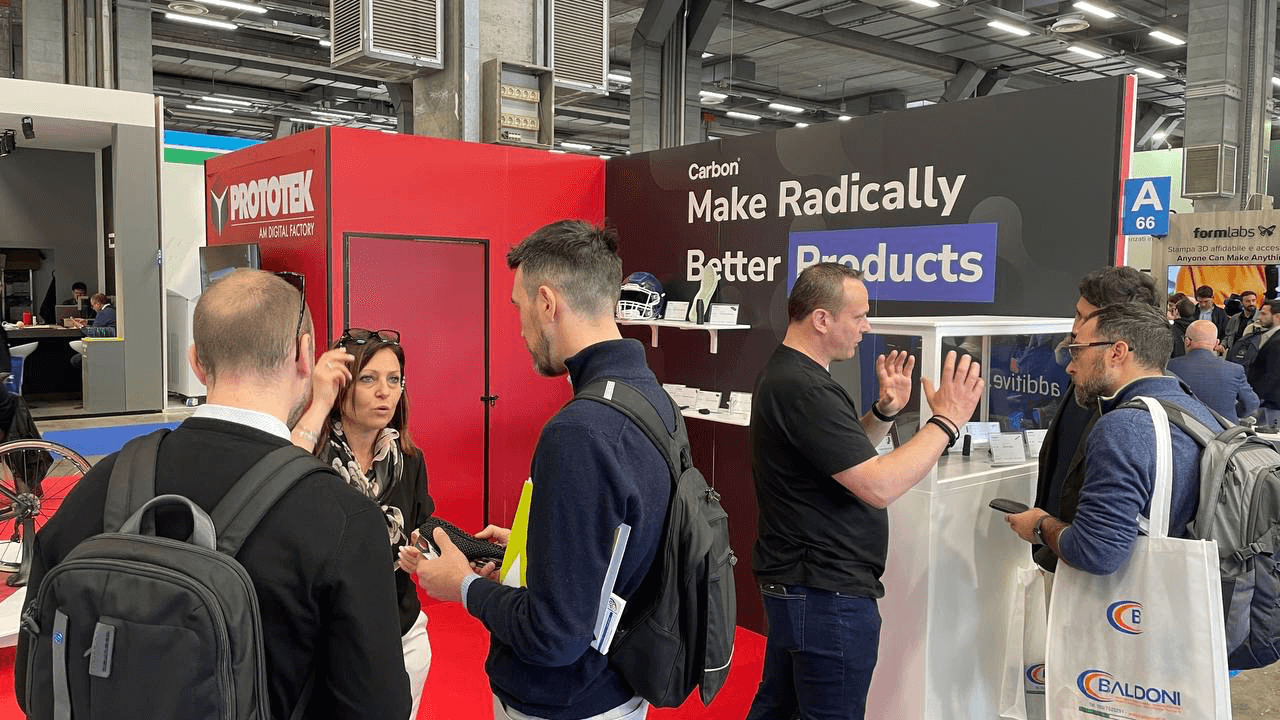
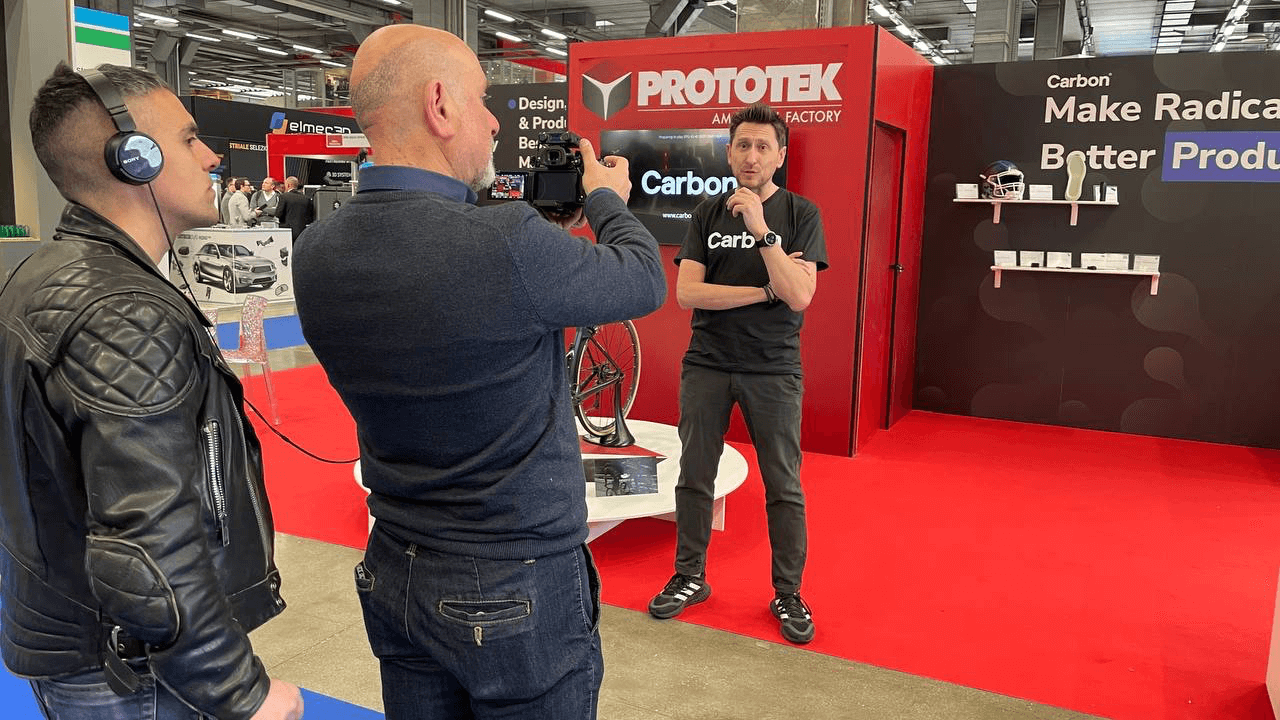
Prototek is an industrial 3D printing service that supports European companies in adopting additive manufacturing. We don’t just print components, but act as a technology partner, offering:
- Technical and design consulting: specification analysis, material selection, and optimal technology choice (Carbon DLS™ or HP MJF).
- Integrated production: printing, post-processing, quality control, and certification support.
- Flexibility and scalability: on-demand production of prototypes, small series, or custom components without the need for internal investments.
- Access to advanced technologies: companies benefit from skills and advanced machines without having to purchase them.
Relying on Prototek means reducing risks, accelerating development times, and accessing advanced industrial technologies, becoming a strategic partner in the company innovation process.
Prototek: How an Additive Manufacturing Partner Operates
Prototek represents a complete industrial AM service bureau, with a consultative and customer-oriented approach. Our offering is based on four operational pillars:
1. Technical Analysis and Design Consulting
Before starting production, Prototek assists the customer in analyzing performance requirements, workloads, tolerances, and regulatory requirements. This enables choosing the most suitable technology and material, from prototype to final part.
2. Selection and Use of the Most Appropriate Technologies
- With Carbon DLS™ (Digital Light Synthesis™), Prototek can produce components with complex geometries and high finishes, suitable for high-performance and ergonomic parts.
- With HP Multi Jet Fusion (MJF), resistant functional components ready for industrial use are created, with mechanical stability and dimensional precision.
3. Integrated Production Workflow
The additive manufacturing process offered includes advanced design, topology optimization, 3D printing, post-processing, dimensional verification, and quality control: everything managed in a single flow to ensure “ready-to-use” parts.
4. Certification and Compliance Support
For regulated sectors (such as aerospace or medical), Prototek supports process documentation, traceability, and material qualification, facilitating industrial adoption of additive manufacturing printed components.
Competitive Advantages in Relying on an AM Service Partner
Relying on a partner like Prototek in additive manufacturing provides concrete advantages:
- Reduction of technological risk: specialized skills reduce errors in technology and material selection.
- Cost and time optimization: on-demand production, elimination of traditional tooling, and rapid processing cycles.
- Access to advanced technologies without high capex: companies can leverage advanced technological solutions without direct machinery investments.
- Greater production flexibility: ability to manage both prototypes and small production series according to market needs.
- Continuous innovation: specialized partners like Prototek constantly update skills, materials, and processes to maintain operational competitiveness.
FAQ - Frequently Asked Questions on Industrial Additive Manufacturing
1. What is the difference between additive manufacturing and traditional 3D printing?
While the terms are often used interchangeably, additive manufacturing in industrial context refers to production-grade technologies designed for creating functional end-use parts with certified materials and repeatable quality. Traditional 3D printing typically refers to desktop or hobbyist machines used primarily for prototyping. Industrial AM uses advanced technologies like Carbon DLS™ and HP Multi Jet Fusion with certified materials (PA12, TPU, EPU, RPU) that meet strict mechanical and regulatory requirements.
2. Is additive manufacturing cost-effective for production, not just prototyping?
Yes, especially for batches under 500-1,000 units. Additive manufacturing eliminates tooling costs (€8,000-€15,000 per mold), enables on-demand production without minimum order quantities, and allows design iterations at zero additional cost. For the OMNIA Technologies case, switching to AM reduced lead time from 42 to 7 days and saved €8,400 per design iteration. The break-even point depends on part complexity and volume, but AM offers flexibility and speed advantages even when unit costs are comparable to traditional methods.
3. Which industries benefit most from additive manufacturing?
Additive manufacturing delivers value across multiple sectors:
- Automotive: under-hood components, customized interiors, lightweight structural parts
- Aerospace: complex geometries, weight-optimized components, rapid spare parts
- Medical: patient-specific devices, surgical instruments, anatomical models
- Sports & Recreation: high-performance equipment (Olympic rowing seats, cycling saddles)
- Fashion & Luxury: innovative footwear, accessories, customized products
- Industrial Machinery: functional components, custom tooling, replacement parts
- Electronics: housings, cooling systems, customized enclosures
Any industry requiring customization, complex geometries, rapid development, or small-to-medium production runs can benefit significantly.
4. What materials are available for industrial additive manufacturing?
Modern additive manufacturing offers production-grade materials with certified properties:
Thermoplastics (HP Multi Jet Fusion):
- Nylon PA12: high strength, chemical resistance, operating temp -40°C to +80°C
- Glass-filled PA12: enhanced stiffness and dimensional stability
- TPU: flexible, impact-resistant, abrasion-resistant
Advanced Resins (Carbon DLS™):
- EPU (Elastomeric Polyurethane): flexible, high rebound, Shore 70-95A
- RPU (Rigid Polyurethane): high strength, heat resistance up to 150°C HDT
- EPX (Epoxy): superior mechanical properties, thermal stability
All materials include technical datasheets, mechanical test reports, and batch certifications for quality assurance.
5. How long does it take from design to finished part?
With optimized additive manufacturing processes:
- Single functional prototype: 4-5 days (including file optimization, printing, post-processing, QC)
- Small batch (10-50 parts): 5-7 days
- Production batch (100+ parts): 7-10 days
For comparison, traditional manufacturing requires 4-12 weeks just for tooling creation, plus additional production time. The OMNIA Technologies case demonstrated reduction from 42 days (traditional) to 7 days (AM) – an 83% time reduction.
Can additive manufacturing maintain consistent quality across production batches?
Yes. Industrial additive manufacturing with ISO 9001:2015 and ISO 27001 certified processes ensures:
- Batch-to-batch material consistency with certified suppliers
- Dimensional accuracy verified through CMM and optical scanning
- Mechanical properties tested per international standards (tensile, impact, thermal)
- Complete traceability documentation for each production run
- Process parameters locked and monitored for repeatability
Technologies like HP MJF and Carbon DLS™ are specifically designed for production consistency, not just prototyping.
6. What’s the difference between Carbon DLS and HP Multi Jet Fusion?
Carbon DLS™ (Digital Light Synthesis):
- Technology: UV light projection with continuous liquid interface production
- Strengths: Excellent surface finish, complex geometries, elastomeric materials
- Best for: High-performance parts, aesthetic components, flexible/soft parts, medical devices
- Materials: EPU, RPU, EPX resins
- Applications: Cycling saddles, rowing seats, luxury footwear, ergonomic components
- Technology: Powder bed fusion with thermal inkjet array
- Strengths: Fast production, robust parts, scalability, cost-effective for volume
- Best for: Functional prototypes, industrial components, mechanical parts, large batches
- Materials: PA12, glass-beads PA12, TPU
- Applications: Industrial machinery, automotive components, tooling, fixtures
Prototek helps select the optimal technology based on your specific requirements for performance, aesthetics, volume, and budget.
7. Do I need to invest in additive manufacturing equipment, or can I outsource?
Most companies benefit more from partnering with an additive manufacturing service like Prototek rather than investing in equipment:
Outsourcing Advantages:
- No capital expenditure (machines cost €150,000-€500,000+)
- No need for specialized operators and training
- Access to multiple technologies (Carbon DLS, HP MJF) without multiple investments
- Scalability: from 1 prototype to 10,000+ parts without capacity constraints
- Expert design optimization and material selection
- Established quality control and certification processes
- Reduced risk: test applications before committing to internal investment
When to consider in-house:
- Extremely high volumes (50,000+ parts/year of same component)
- Highly confidential/proprietary designs requiring absolute control
- Daily production requirements with stable, predictable demand
For most applications, the service bureau model offers better ROI, flexibility, and access to expertise.
8. How sustainable is additive manufacturing compared to traditional manufacturing?
Additive manufacturing supports sustainability goals through:
Material Efficiency:
- 95% less waste vs. subtractive manufacturing (CNC, milling)
- Only material needed for the part is used (plus minimal support structures)
- Recyclable powder/resin in many systems
Inventory Optimization:
- On-demand production eliminates excess inventory
- Reduces obsolescence waste by 15-20% annually
- Digital inventory: store files, not physical parts
Supply Chain Impact:
- Localized production reduces transportation emissions
- Fewer suppliers needed (no separate tooling manufacturers)
- Consolidation of parts reduces assembly and logistics
Energy & Resources:
- Lightweight designs reduce energy in end-use (e.g., aerospace, automotive)
- Optimized geometries improve thermal efficiency
- No chemical waste from traditional tooling processes
These factors support ESG (Environmental, Social, Governance) reporting and corporate sustainability commitments.
9. How do I get started with additive manufacturing for my company?
Starting with additive manufacturing through Prototek follows a clear pathway:
Step 1: Initial Assessment (Week 1)
- Submit 2-3 CAD files of components you’re considering for AM
- Free technical feasibility analysis
- Technology and material recommendations
- Cost and timeline estimates
Step 2: Pilot Project (Weeks 2-4)
- Select 1 component for trial production
- 5-10 functional parts for testing
- Design optimization for additive manufacturing
- Performance validation in your application
Step 3: Production Scale-Up (Month 2+)
- Transition to regular production batches
- Establish quality protocols and specifications
- Integration into your supply chain
- Continuous improvement and design iteration
No upfront investment required – pay only for parts produced. Most companies see ROI within first 3-6 months through eliminated tooling costs and accelerated time-to-market.
Conclusions
In 2025–2026, additive manufacturing confirms its strategic importance in the European industrial landscape, with a growing market, increasingly central AM services, and applications that go beyond prototyping toward real industrial components.
Collaboration with an AM service bureau like Prototek enables companies to accelerate innovation, optimize costs and times, and access advanced technologies that improve performance, customization, and sustainability in production processes.