


Professional 3D Printing Services
for Industrial Additive Manufacturing
At Prototek, we offer professional 3D printing services and dedicated technical consulting, helping engineering teams select the right technology for every project.
From functional prototypes to production-ready industrial components.
We work with HP Multi Jet Fusion (HP MJF) and Carbon DLS™ (Digital Light Synthesis™), combining reliability, quality, confidentiality, and technical depth to meet the standards of demanding industrial applications.
Why Choose Prototek for 3D Printing Services
Professional 3D printing services are a strategic advantage for companies where fast development, customisation, and product quality are critical.
With 20 years of experience, Prototek is a technology partner that supports every stage of the process — from design and prototyping to scalable series production, up to thousands of parts.
Our services are particularly valuable for industries such as:
- Automotive and mobility
- Marine and nautical engineering
- Industrial machinery and automation
- Footwear, fashion, and professional sports equipment
- Prosthetics
- Lighting and consumer products.
We deliver flexible, high-quality, results-driven solutions, adapting to client requirements from a single prototype to large-scale production runs.
Advanced Additive Manufacturing Technologies
Since Prototek offers 3d printing manufacturing services, we leverage state-of-the-art 3D printing technologies to achieve the highest performance and precision.
Carbon DLS™ (Digital Light Synthesis™)
Carbon DLS™ uses an advanced photopolymerization process to create resin parts with:
High mechanical strength
Perfect surface finishes
Complex geometries
This technology is ideal for producing functional prototypes, end-use components, and highly detailed models in design, consumer products, and industrial applications.
HP Multi Jet Fusion (MJF)
HP MJF fuses thermoplastic powders layer by layer, delivering:
Outstanding mechanical resistance
Excellent dimensional accuracy
High productivity
It is perfect for small production runs, technical components, and functional prototypes that need testing under real-world conditions.
Benefits of Prototek’s 3D Printing Services
Both Carbon DLS™ and HP MJF provide:
Reduced lead times compared to traditional manufacturing
Lower production costs at scale, with no tooling investment
Greater design freedom, including complex and organic geometries
High repeatability and industrial-grade quality control.
Whether your project requires aesthetic prototypes or mechanically functional components, Prototek ensures performance, durability, and top-quality results.
Prototek's 3d Printing Manufacturing Services
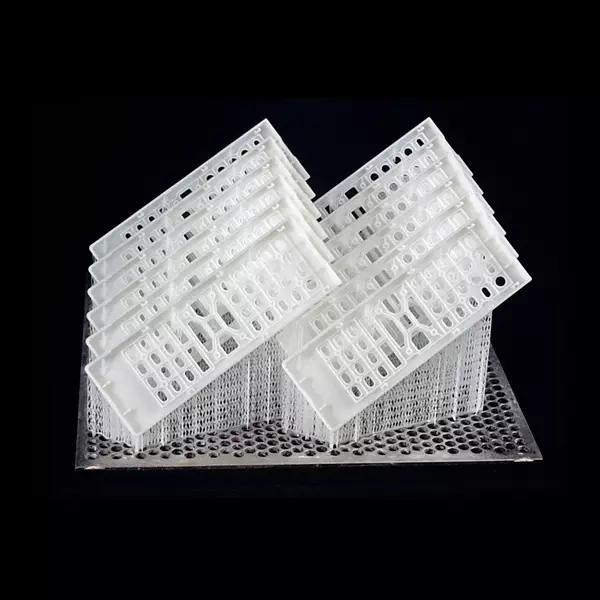
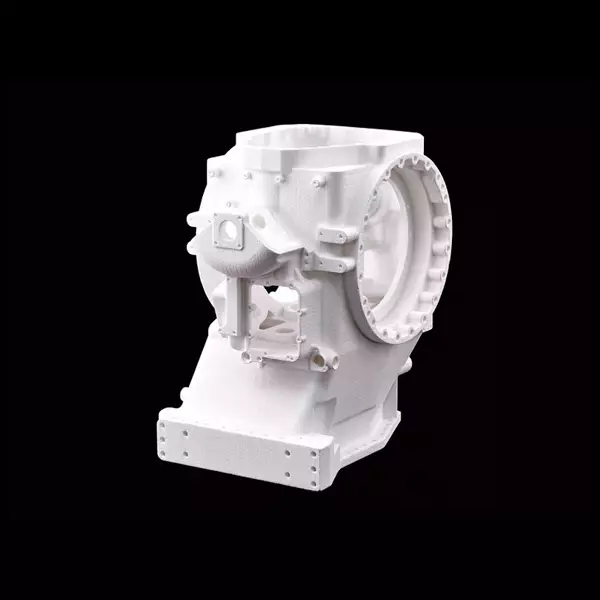
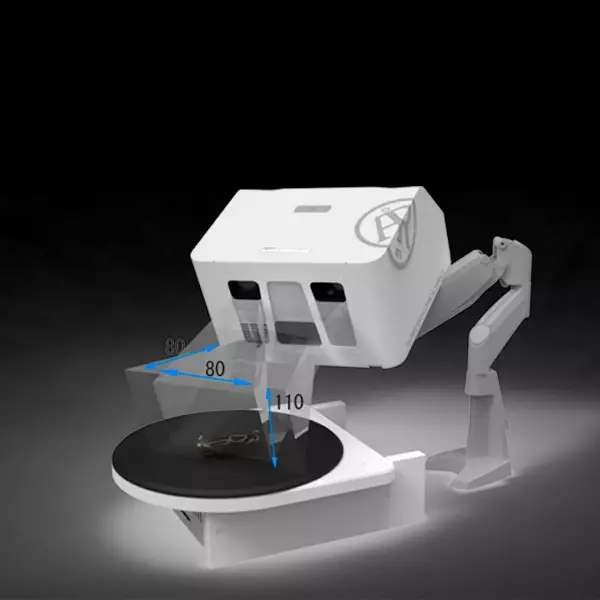
From Design to Finished Part — Our Full 3D Printing Workflow
We provide a full-3D printing services package that covers the entire additive manufacturing workflow — from design to finished part.
3D CAD Design and DfAM (Design for Additive Manufacturing)
DfAM is not simply file preparation — it is the engineering discipline that determines whether a part truly exploits the potential of additive manufacturing. Our specialists work alongside your engineering team from the earliest project phase, applying topology optimisation to reduce weight without sacrificing strength, lattice structures for energy absorption or thermal management, part consolidation to eliminate assembly steps, and wall-thickness analysis to ensure printability.
The result is not a CAD file adapted for printing — it is a component designed for additive manufacturing from day one, optimised for performance, cost, and production efficiency.
In-House Production Management
Once the design is validated, we manage the entire production process internally: technology and material selection, machine preparation, print execution on our industrial fleet, and all post-processing steps — support removal, surface finishing, dyeing, and mechanical or chemical treatments.
Every stage is backed by dedicated technical consulting, ensuring tolerances, surface quality, and mechanical properties meet your specifications before the part leaves our facility.
3D Scanning
We perform 3D scanning of objects of all sizes, from small items such as jewellery to full-body scans, using advanced technologies to ensure precise and reliable results — supporting reverse engineering, quality control, and design validation.
Prototek — Your 3D Printing Service Provider in Europe
Choosing the right 3D printing partner directly impacts your time-to-market and unit costs. Not all service bureaux offer the same depth of material expertise, production capacity, or technical support.
With 20 years of experience, Prototek supports engineering teams across Italy and Europe with a material portfolio spanning Carbon DLS™ and HP MJF.
We don’t just print your files — we optimise your geometry, recommend the right technology, manage post-processing, and deliver parts ready for functional use or direct integration into your assembly line.
Tailored solutions for every need
Our 3D printing services support:
- Industrial companies and OEMs
- Startups and innovation labs
- Engineering and design teams
- Anyone requiring reliable, high-quality production at scale.
Our processes adapt to single pieces, pre-series validation, and large-scale production runs, always maintaining the same technical standards.
Frequently Asked Questions
What is the difference between HP Multi Jet Fusion and Carbon DLS™?
HP Multi Jet Fusion (HP MJF) is a powder-based technology that fuses thermoplastic materials layer by layer, ideal for durable, functional nylon PA12 and TPU parts.
Carbon DLS™ (Digital Light Synthesis™) is a resin-based photopolymerisation process, better suited to parts requiring fine surface finish, elastomeric behaviour, or complex rigid geometries. The right choice depends on mechanical requirements, material behaviour, and end-use application — our engineers help identify the optimal technology for each project.
Can 3D printing be used for production, not just prototypes?
Yes. Both HP MJF and Carbon DLS™ are certified for end-use, functional parts, not only prototyping. Prototek’s 3D printing services scale from a single functional prototype to series production of thousands of parts, without tooling or mould costs — making additive manufacturing viable for both product development and industrial production runs.
How does 3D printing compare to traditional manufacturing in terms of lead time and cost?
3D printing eliminates tooling and mould setup, which reduces both lead time and upfront cost for small and medium production volumes compared to injection moulding or CNC machining. At higher volumes, the two approaches can be evaluated case by case — our team advises on the most cost-effective technology based on part geometry, material, and quantity.
What certifications guarantee the quality of Prototek’s 3D printing services?
Prototek operates under ISO 9001 (quality management) and ISO 27001 (information security) certification. Every part is produced with traceable materials, validated process parameters, and documented post-processing, ensuring consistent, repeatable results for regulated and quality-critical industries.
Which industries use industrial 3D printing services the most?
Industrial 3D printing is widely used in automotive, marine, industrial machinery and automation, footwear and sports equipment, prosthetics, and lighting design — sectors where complex geometries, material performance, and fast design iteration are critical. Prototek supports engineering teams across these industries with both prototyping and production-grade parts.
Does 3D printing support complex or customised geometries?
Yes — additive manufacturing removes most of the geometric constraints of traditional manufacturing. Features such as internal lattices, undercuts, and consolidated multi-part assemblies, which would require complex tooling or multiple components in traditional processes, can be produced directly in a single print. This is central to Design for Additive Manufacturing (DfAM), which we apply to every project.
Whether you need to develop a new product, validate a concept, or move to production,
our engineers are ready to analyse your requirements and identify the best technical solution for your project.