How 3D Printing Became Scalable Industrial Technology
Additive manufacturing production has undergone a radical transformation in recent years.
What was once considered exclusively a rapid prototyping technology now represents a mature production solution, capable of managing production batches from a few pieces to tens of thousands of finished components.
This paradigm shift didn’t happen by chance: the evolution of industrial additive manufacturing technologies, certified materials, and quality control processes has enabled the transition from experimental laboratory to structured production line.
The Journey from Prototyping to Serial Production
The Origins: 3D Printing as a Prototyping Tool
For over two decades, 3D printing was primarily used to accelerate the initial phases of product development. Engineers and designers could quickly visualize an idea, test a component’s ergonomics, or verify the assembly of complex parts without waiting weeks for the creation of expensive molds.
“For a long time, additive manufacturing was considered a support technology: a useful tool for rapid prototyping, to visualize an idea, to accelerate the initial phases of product development,”
explains Andrea Barchi, Director of the 3D Production Division at Prototek, an Italian company part of the Dedem S.p.a. Group that has been working with additive technologies since 2007.
This perception limited the technology’s use to the preliminary phases of product development, relegating additive manufacturing production to a marginal role compared to traditional production methods such as injection molding or CNC machining.
The Turning Point: Technologies Designed for Production
The real change began when 3D printing technologies were designed from the outset not for prototyping, but for additive manufacturing production of finished components.
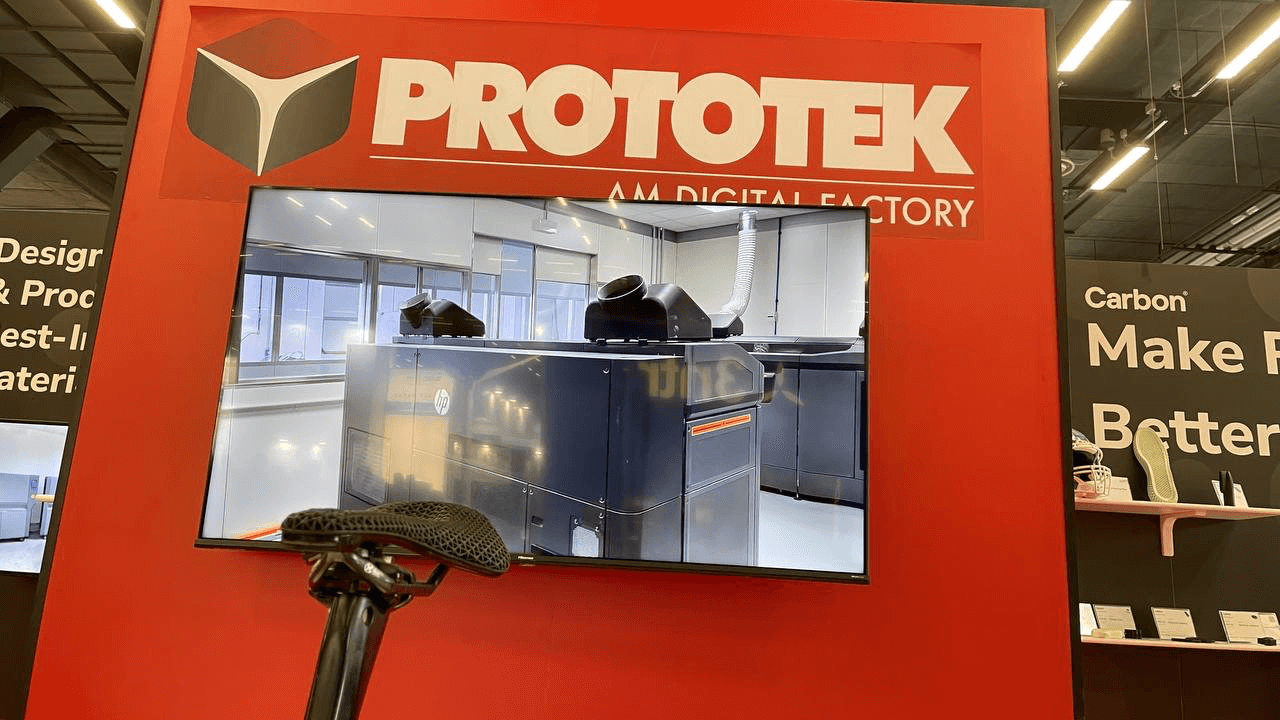
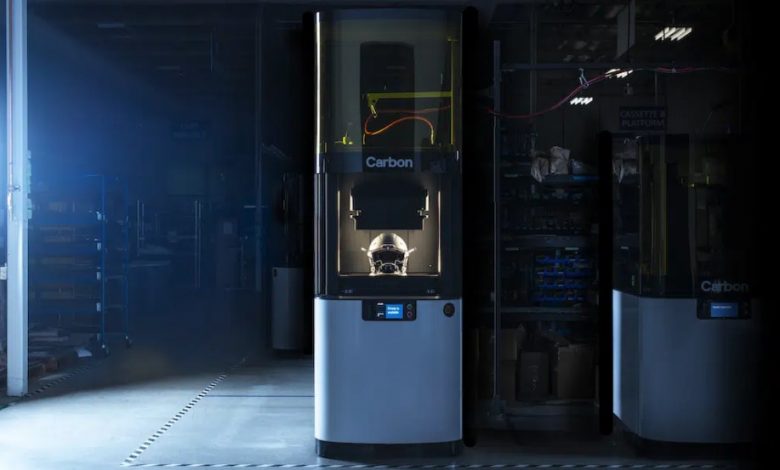
The adoption of platforms such as HP Multi Jet Fusion and Carbon DLS™ (Digital Light Synthesis™) marked this fundamental shift.
“Carbon DLS™ represents the turning point for us,” states Barchi.
“It’s a technology designed from the beginning for producing final parts. It offers speed, high surface quality, and materials with stable mechanical properties over time. This allowed us to definitively cross the boundary between prototype and product.”
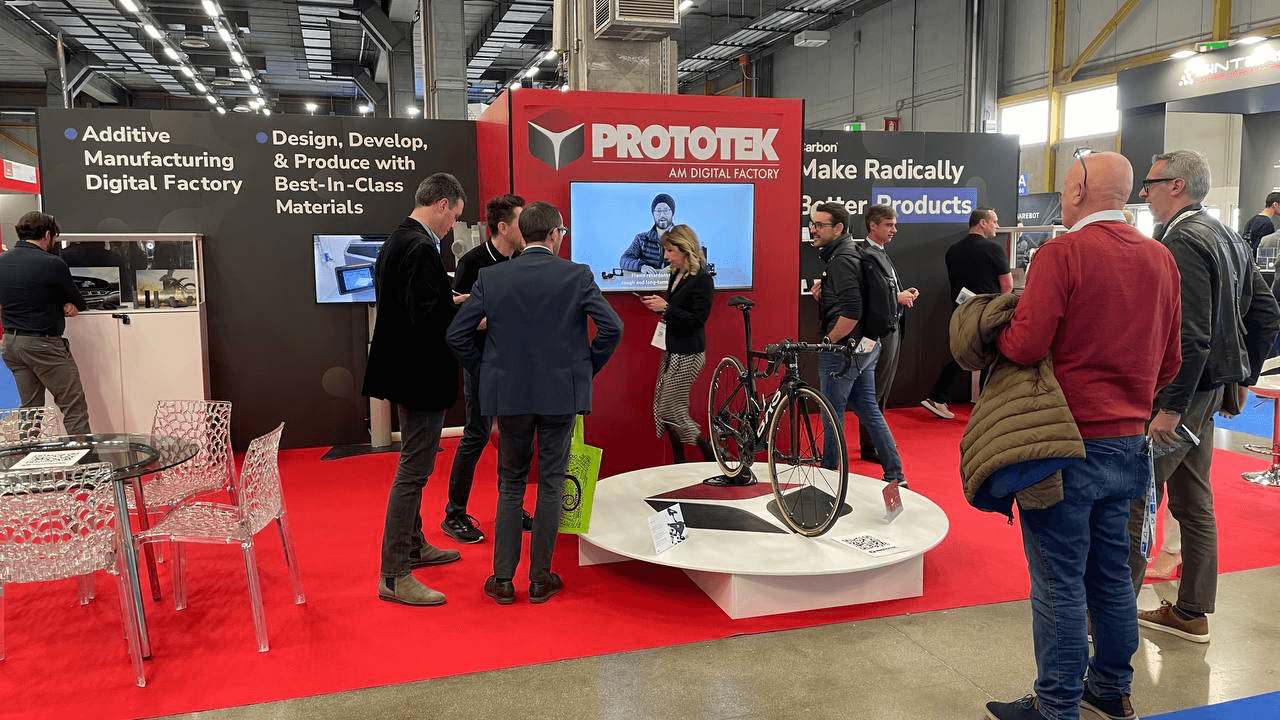
Prototek, headquartered in Valenza in the heart of the Piedmont jewelry district, has experienced this evolution firsthand. Founded in 2007 with four people focused on the jewelry sector, the company has progressively expanded its scope toward technical sectors such as: automotive, aerospace, sporting goods, fashion & footwear, industrial machinery, and automation.
The Pillars of Scalable Additive Manufacturing Production
1. Certified Materials with Guaranteed Mechanical Properties
The availability of certified technical materials has been a crucial enabling factor for industrial additive manufacturing production. Nylon PA12, glass-filled PA12, TPU, rigid and elastomeric polyurethanes:
each material today comes with detailed technical data sheets, compliance certifications, and reproducible mechanical tests.
This allows the use of components made with additive manufacturing production in critical applications, where mechanical performance must be guaranteed over time and documentable for quality audits.
2. Production Capacity and Quality Consistency
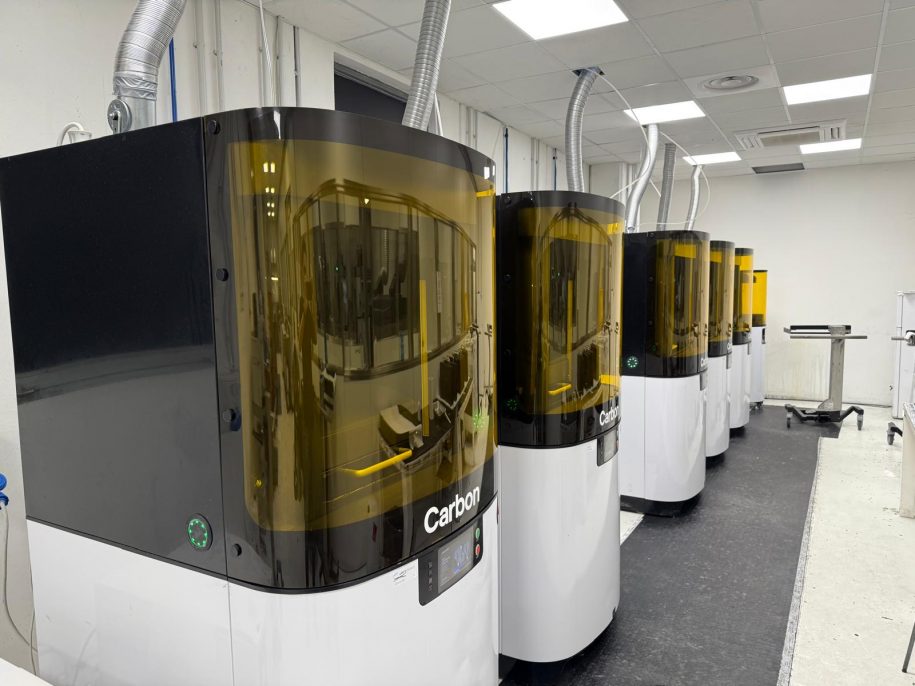
Scalability requires production capacity. Prototek currently has 7 Carbon DLS™ machines and is among the world’s leading consumers of Carbon materials in Europe.
“Having this production capacity radically changes our positioning,” observes Barchi.
“We can manage regular batches, guarantee continuity, and respond to international requests. We’re no longer an experimental laboratory, but a structured production reality.”
Parallel production across multiple machines, combined with standardized post-processing and integrated quality control, allows maintaining consistent quality standards even at high volumes.
3. Design for Additive Manufacturing (DfAM)
The transition from prototyping to additive manufacturing production requires a specific design approach. “Many models arrive designed for traditional technologies like injection molding or CNC. We intervene to optimize them, adapting them to additive,” explains Barchi.
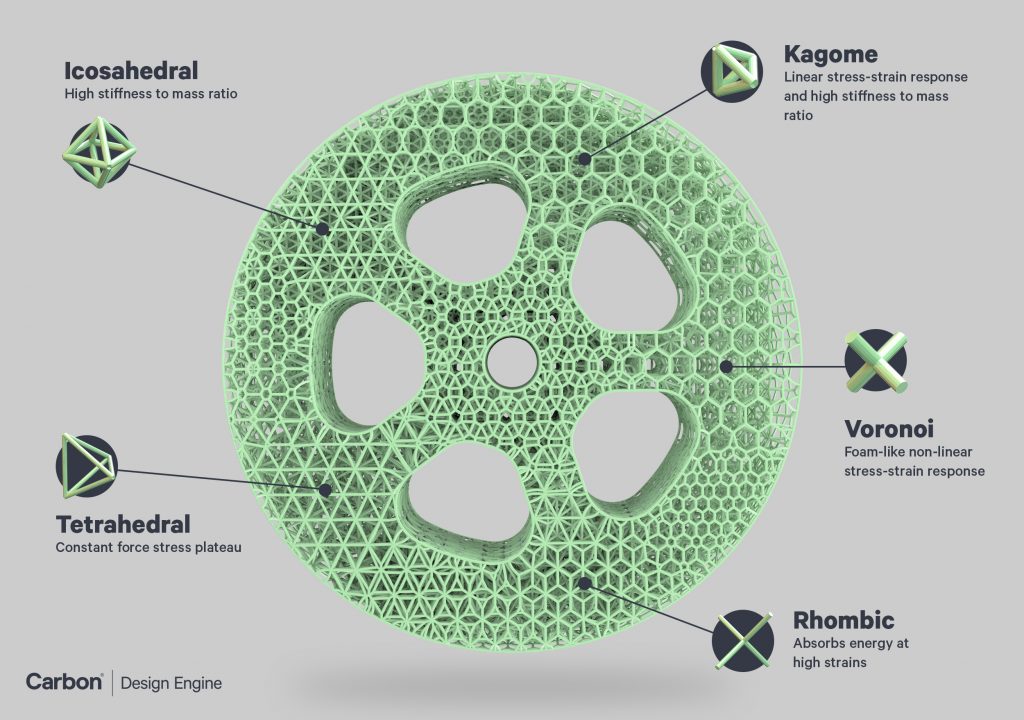
This engineering phase is fundamental: it allows exploiting the geometric advantages of additive manufacturing production (lattice structures, internal channels, multi-part consolidation) while reducing weight, improving performance, and optimizing costs.
Real-World Applications: From Theory to Practice
Sports Sector: Cycling Saddles and Rowing Equipment
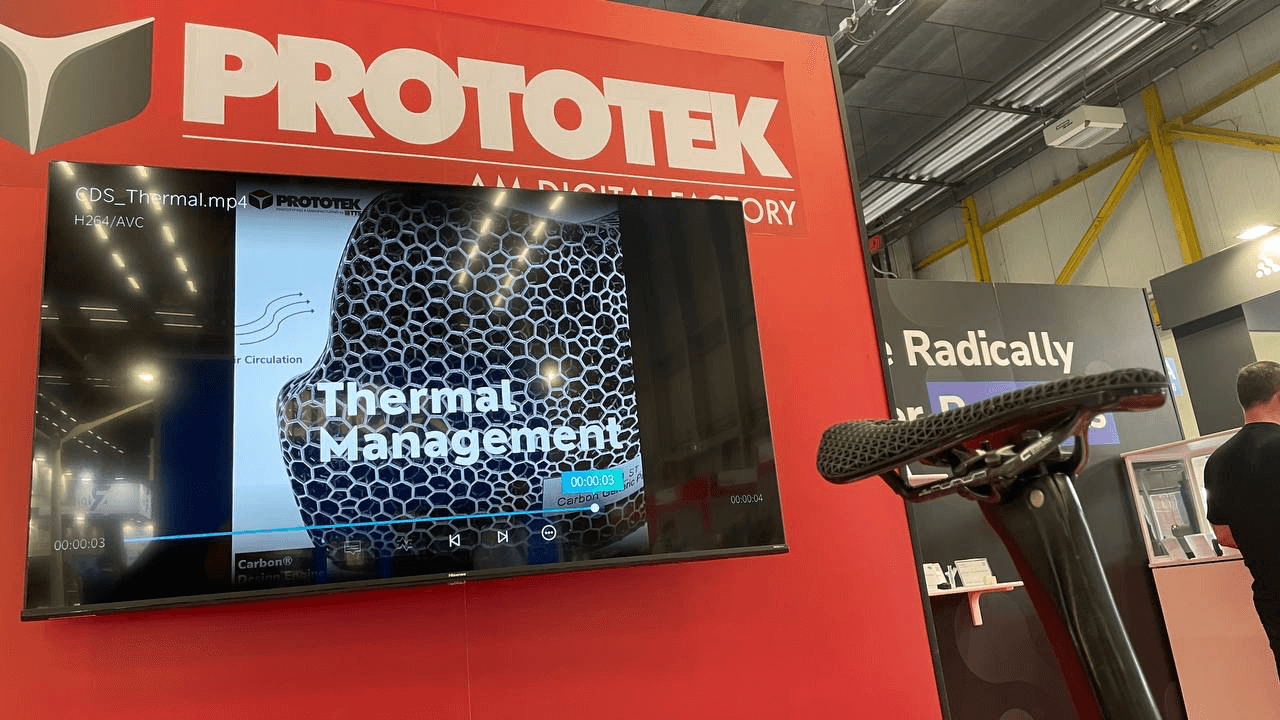
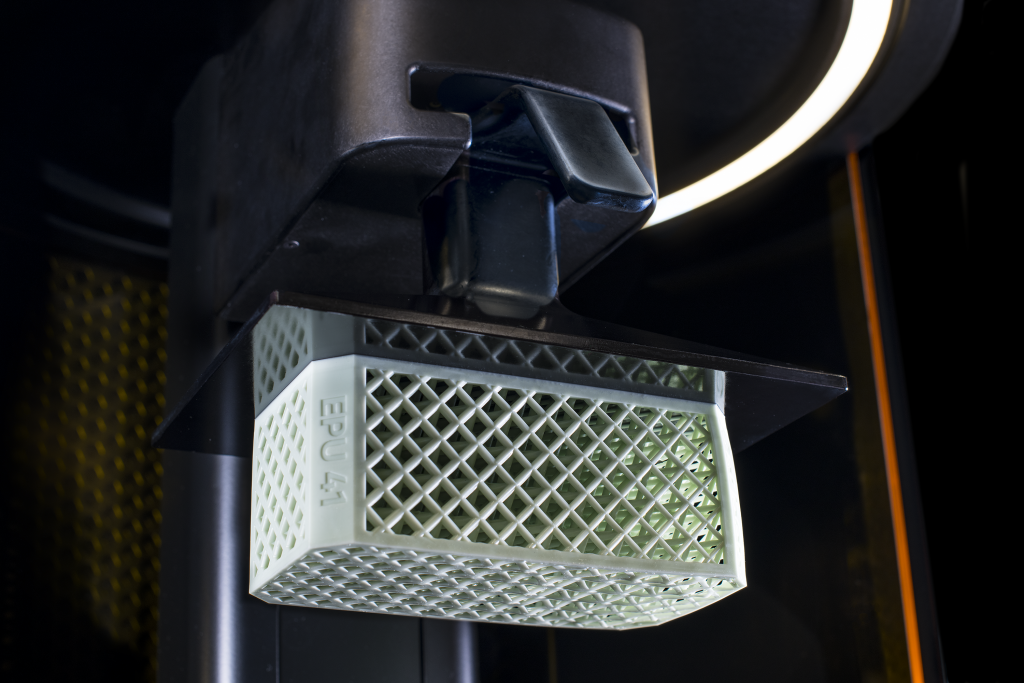
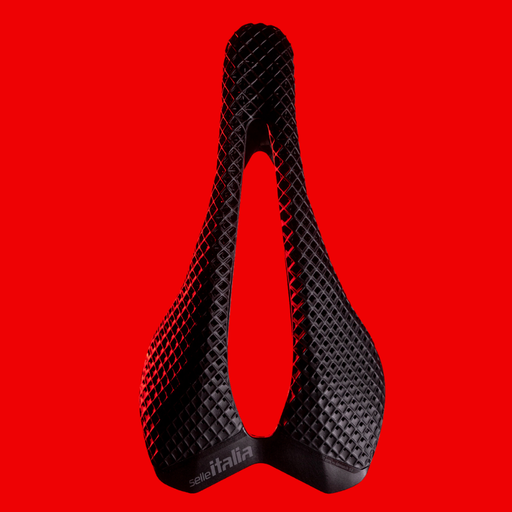
Prototek was among the first companies in Europe to use additive manufacturing production to create completely 3D-printed padding for cycling saddles for Selle Italia.
The lattice structure allows differentiating stiffness and comfort in specific zones, achieving performance impossible with traditional foams.
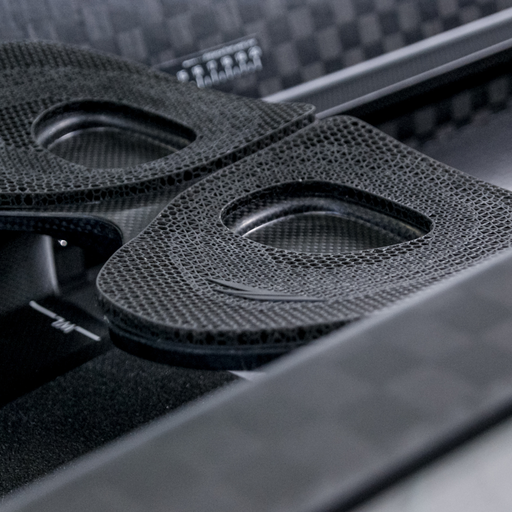
Similarly, the seat pads for rowers in Filippi boats – which won medals at the Paris 2024 Olympics – are series-produced with Carbon DLS™ technology, guaranteeing lightness, strength, and repeatability.
Industrial Machinery: Functional Components in Production
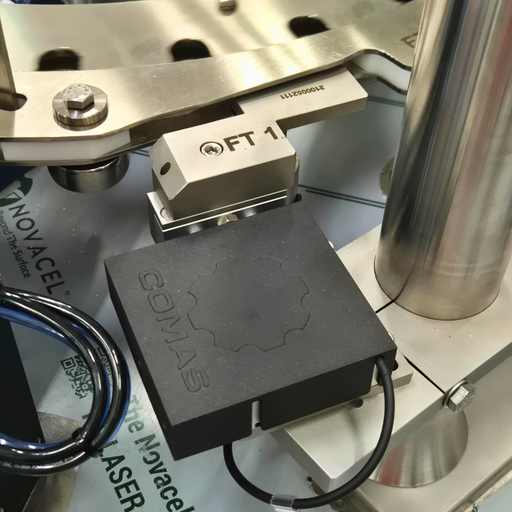
In the pharmaceutical machinery sector, as documented in the COMAS (OMNIA Technologies Group) case study, additive manufacturing production in Nylon PA12 with HP Multi Jet Fusion technology enabled the creation of critical components such as:
anti-rotation devices, dosing bellows, and supports for diagnostic machinery.
The result: lead time reduction from 42 to 7 days, elimination of tooling costs, and the ability to rapidly iterate the design without additional investments.
Fashion and Design: From Experimentation to Production
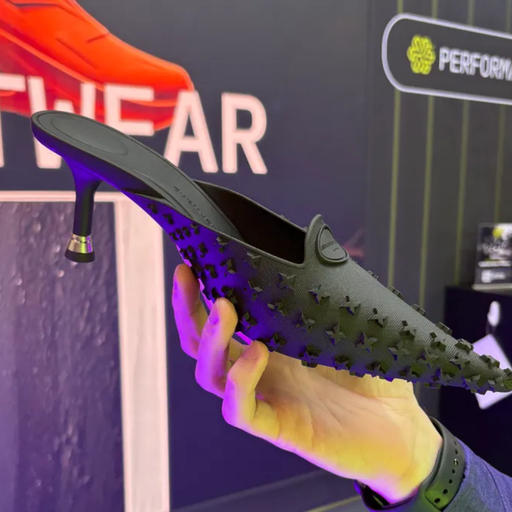
Prototek has created experimental footwear for Alexander Wang – The Griphoria Knittel Heels – and components for the fashion sector, demonstrating how scalable additive manufacturing production can also meet high aesthetic requirements, not just functional ones.
The Prototek Model: Engineering Consulting and Integrated Production
What distinguishes an online 3D printing service from an additive manufacturing production partner is the consultative approach. Prototek doesn’t just print CAD files: it intervenes in the feasibility analysis phase, recommends the most appropriate technology and material, optimizes the design for additive, and manages the entire process through final quality control.
“Our job isn’t just to print a file,” emphasizes Barchi. “The engineering phase is fundamental. It transforms any object into a component truly designed for 3D printing.”
This integrated approach includes:
- Technical-economic feasibility analysis of the component
- DfAM optimization of the CAD file
- Selection of the most appropriate technology and material
- Scalable additive manufacturing production (pre-series, small batches, up to large volumes)
- Post-processing (finishing, coloring, surface treatments)
- Dimensional quality control
- Complete traceability documentation
- ISO 9001 and ISO 27001 certifications
The Future of Additive Manufacturing Production: Multi-Material and Differentiated Properties
Looking ahead, the frontiers of additive manufacturing production are shifting toward multi-material and the ability to vary mechanical properties within the same component.
“We haven’t yet achieved total freedom of design and execution, but additive already allows working on internal structures and stiffness gradients that would be impossible with traditional technologies,” highlights Barchi.
This evolution, combined with the integration of artificial intelligence for topology optimization and increasingly high-performance materials, promises to further expand the application field of industrial additive manufacturing production.
Conclusion: A Mature Production Technology
The journey from rapid prototyping to scalable additive manufacturing production is now complete. 3D printing today is no longer a “support” technology, but a genuine production alternative for finished components, small series, and customized production.
As demonstrated by Prototek’s experience – which in nearly twenty years has transformed an artisanal activity for the jewelry district into an international industrial reality with production capacity of thousands of pieces per month – additive manufacturing has reached the maturity necessary to compete with traditional methods.
The question is no longer “whether” to use additive manufacturing production, but “for which components” it represents the most advantageous solution in terms of performance, costs, and time-to-market.
FAQ - Frequently Asked Questions on Additive Manufacturing Production
1. What is additive manufacturing production and how does it work?
Additive manufacturing production is a fabrication process that creates objects by adding material layer by layer, unlike subtractive methods (milling, turning) that remove material.
Modern technologies like HP Multi Jet Fusion and Carbon DLS™ enable producing finished components with certified mechanical properties, starting directly from 3D CAD files.
2. Is additive manufacturing production suitable only for prototypes or also for series production?
Modern additive manufacturing production is fully suitable for series production.
Technologies like HP Multi Jet Fusion and Carbon DLS™ are specifically designed to produce finished components in batches from 1 to over 10,000 parts, with certified mechanical properties and guaranteed repeatability.
3. What are the advantages of additive manufacturing production compared to traditional methods?
The main advantages include:
- Elimination of tooling costs (molds, dies)
- Elimination of excessive stock inventory
- Ability to produce variable batches without economic penalties
- Geometric freedom for complex structures impossible to create otherwise
- Drastic reduction in development times (from weeks to days)
- Mass customization without additional costs
4. What materials are available for industrial additive manufacturing production?
Certified materials include:
- Thermoplastics such as Nylon PA12 (also glass-beads) and TPU for mechanical applications
- Rigid polyurethanes (RPU) and epoxy resins (EPX) for high temperatures
- Flexible polyurethanes (EPU) for gaskets and elastomeric components
- High-performance resins for technical applications.
All materials come with certifications, technical data sheets, and mechanical tests.
5. How much does additive manufacturing production cost compared to injection molding?
For batches under 500-1,000 units, additive manufacturing production is generally more economical due to the absence of tooling costs (e.g., €8,000-€15,000 per mold). For very high volumes (tens of thousands), injection molding may be more cost-effective. The break-even point depends on the specific component, but additive manufacturing production offers flexibility and reduced time-to-market even when the unit cost is slightly higher. Generally, the cost per individual part or batch with 3D printing varies based on geometries and volumes, as well as material and printing times.
6. Which industrial sectors use additive manufacturing production?
Main sectors include: automotive (under-hood components, customized interiors), aerospace (lightweight parts, complex geometries), medical (patient-specific devices, surgical instruments), industrial machinery (functional components, equipment), marine (customized components), sporting goods (high-performance components), electronics (housings, supports, cooling), footwear, fashion, and design (high-performance and aesthetic customized components).
In reality, the application possibilities are potentially infinite. While it’s true that not everything can be made through 3D printing, at Prototek we continuously work to identify new uses and develop its potential.
7. How long does additive manufacturing production take from CAD to finished part?
With an optimized process, typical timelines are: single prototype 4-5 days, 100-piece production batch 7-10 days. This includes file optimization, printing, post-processing, and quality control. By comparison, traditional methods require 4-12 weeks for tooling creation alone.
8. Is the quality of components from additive manufacturing production reliable over time?
Yes, modern materials offer dimensional stability and consistent mechanical properties over time. Each production batch is certified with mechanical tests (tensile, impact, thermal) and complete traceability documentation. ISO 9001 and ISO 27001 certified processes guarantee repeatability and compliance with industrial standards.
9. Is it possible to modify the design in additive manufacturing production without additional costs?
One of the greatest advantages of additive manufacturing production is that design modifications require only updating the CAD file, without new tooling costs. This enables rapid iterations, continuous improvements, and customizations without additional investments, making mass customization possible.
Want to explore how additive manufacturing production can optimize your manufacturing? Request a free feasibility analysis for your components and discover the advantages in terms of costs, timelines, and performance.