Why 3D Printing and Rapid Prototyping are Critical in Modern Manufacturing
In today’s competitive manufacturing environment, reducing development cycles while maintaining mechanical reliability is no longer optional. 3D printing and rapid prototyping have become strategic tools for companies seeking faster validation, cost efficiency, and scalable innovation.
Traditional prototyping methods—CNC machining or injection molding—often require long lead times and high upfront tooling costs. In contrast, additive manufacturing eliminates tooling constraints, enabling rapid iteration and functional validation within days rather than weeks.
For European manufacturers facing supply chain instability and pressure to accelerate time-to-market, industrial 3D printing and rapid prototyping offer a measurable competitive advantage.
From Concept to Functional Part in Days
Rapid prototyping is no longer limited to visual models. Today’s additive technologies enable production-grade components with mechanical properties suitable for:
Structural housings
Snap-fit assemblies
End-use mechanical components
Jigs and fixtures
Low-volume industrial production.
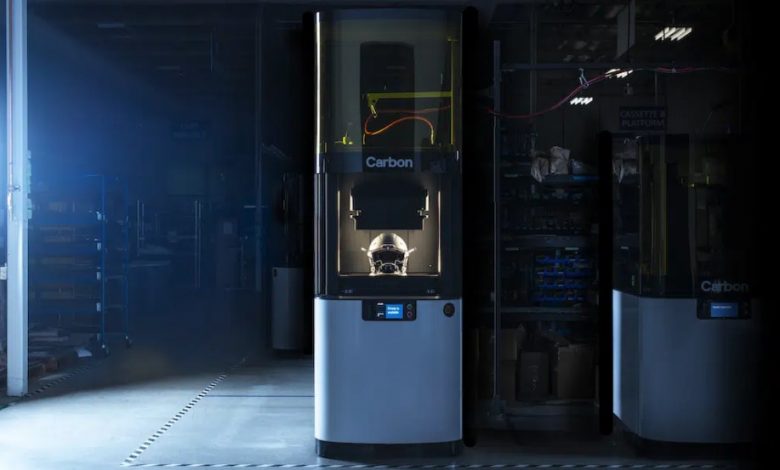
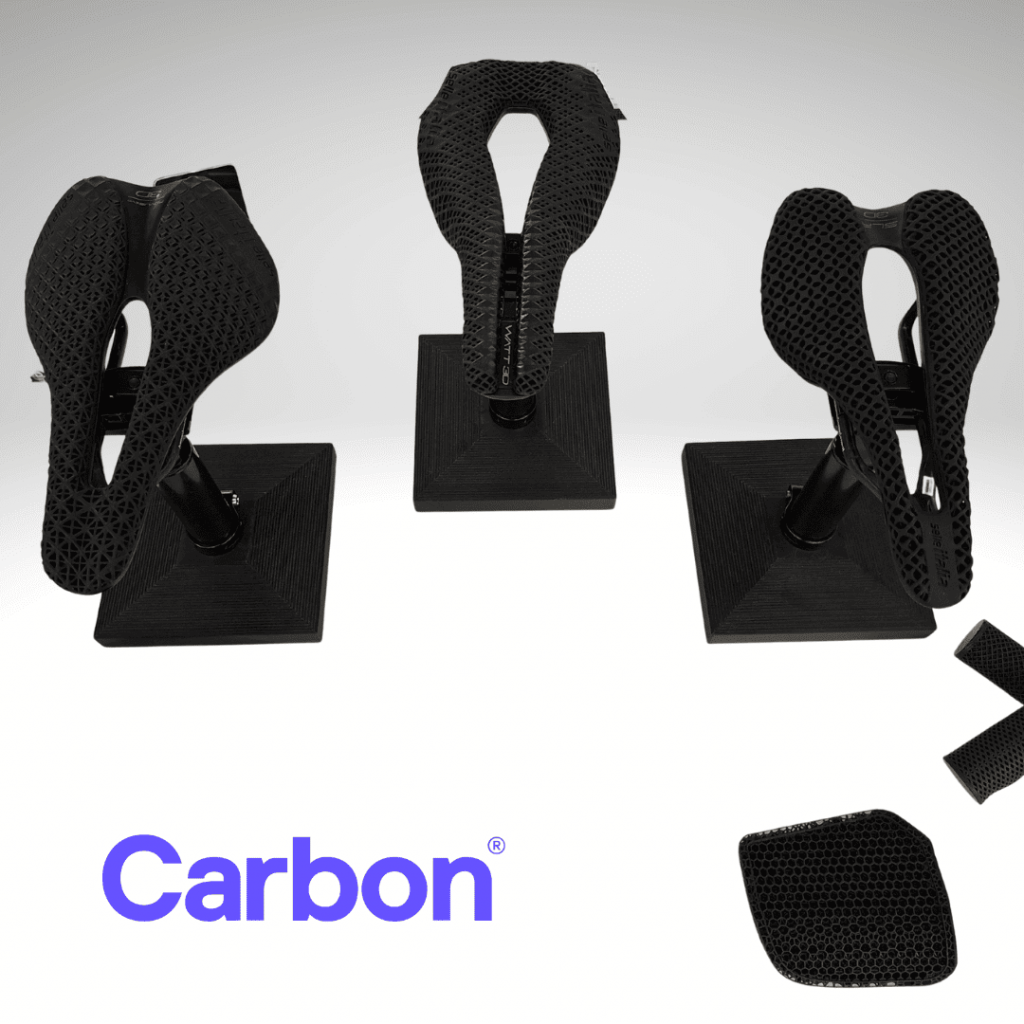
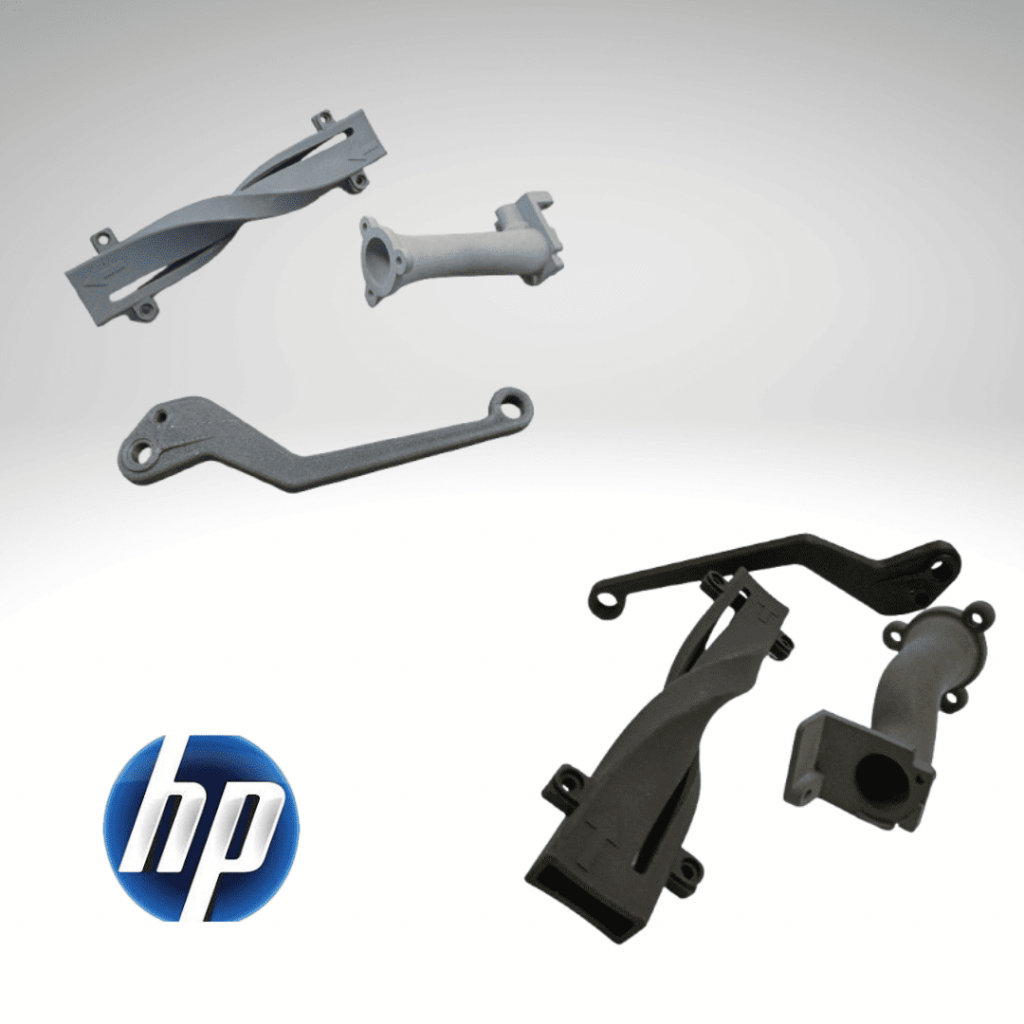
Advanced 3D technologies such as Carbon (with its Digital Light Synthesis™ process – DLS™) and HP (with Multi Jet Fusion – MJF technology) have redefined what engineers can expect from polymer additive manufacturing.
Carbon DLS™ Technology
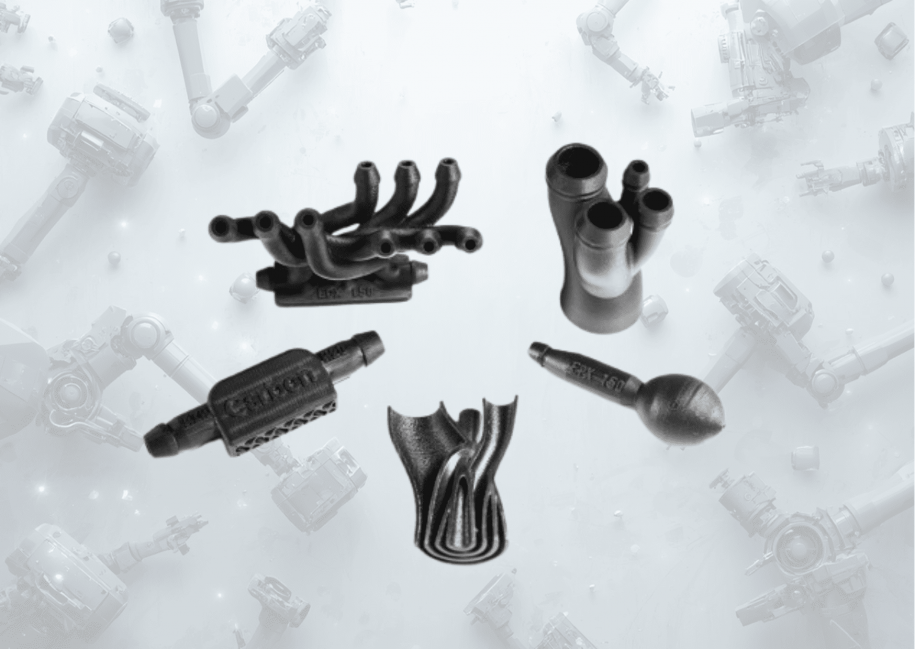
Carbon DLS™ for 3D printing and rapid prototyping enables isotropic mechanical properties, smooth surface finishes, and elastomeric or rigid engineering materials. It is particularly suitable for:
Functional end-use parts
Complex geometries
High-detail mechanical components
Elastomeric seals and lattices.
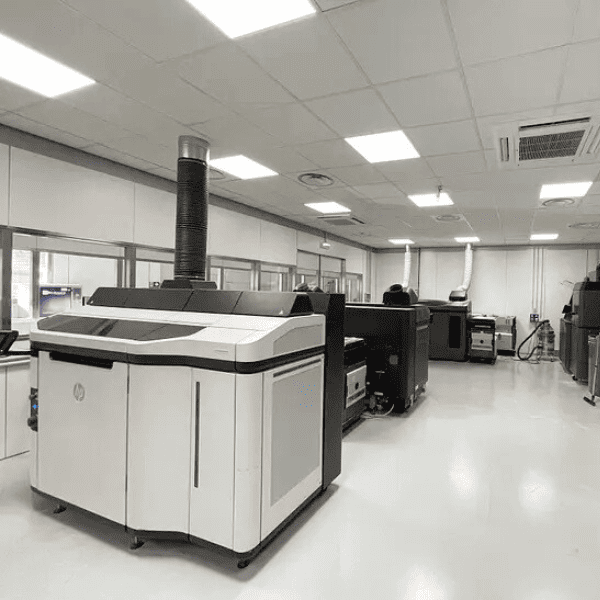
HP Multi Jet Fusion (MJF)
HP Multi Jet Fusion delivers:
High dimensional accuracy
Excellent repeatability
Strong mechanical performance
Cost-effective batch production
For companies evaluating alternatives to injection molding for short runs, MJF is often a technically and economically viable rapid manufacturing 3d printing solution.
Market Needs Driving Adoption of 3D Printing and Rapid Prototyping
European industrial companies are not adopting 3D printing and rapid prototyping for trend reasons. Adoption is driven by measurable operational constraints: compressed innovation cycles, cost volatility, supply chain fragility, and increasing demand for customization.
Below is a deeper analysis of the structural drivers reshaping manufacturing strategy.
1. Time-to-Market Reduction
In competitive sectors—automotive components, industrial automation, consumer electronics, medical devices—product lifecycles are shrinking. Delays in prototyping directly translate into lost market share.
Traditional tooling workflows introduce friction:
Mold design and validation
Tool manufacturing lead times (6–12+ weeks)
Tool modification costs in case of design revisions
With 3D printing and rapid prototyping, iteration becomes digital and immediate. Engineers can:
Validate form, fit, and function within days
Perform mechanical stress testing on functional prototypes
Optimize assemblies before final tooling investment
Run pilot batches for early customer validation
This reduces development risk and accelerates commercialization.
2. Design Freedom and Engineering Optimization
Subtractive manufacturing and molding impose geometric constraints. Undercuts, internal channels, lattice cores, and topology-optimized structures often require complex tooling or are economically unfeasible.
Additive manufacturing removes these constraints.
Engineering advantages include:
Lightweight lattice structures with maintained rigidity
Internal fluid channels for cooling or airflow
Consolidation of multiple components into a single printed part
Organic geometries derived from topology optimization software
This design freedom directly improves:
Performance-to-weight ratio
Thermal management
Assembly simplification
Reduced failure points
For R&D departments, 3D printing and rapid prototyping become enablers of performance engineering—not just prototyping tools.
3. Supply Chain Resilience and Localization
Global supply chains have demonstrated structural fragility due to geopolitical instability, logistics disruptions, and raw material shortages.
Manufacturers increasingly prioritize:
Regional production capacity
Reduced reliance on offshore tooling
Shorter logistics routes
Faster replenishment cycles
Additive manufacturing supports decentralized production models. Digital files replace physical tooling, allowing localized manufacturing near the point of demand.
This shift improves:
Lead time predictability
Inventory agility
Operational continuity
In sectors with high spare-part variability, digital inventories reduce exposure to global disruptions.
4. Cost Control for Low and Medium Volumes
Injection molding remains cost-efficient at high volumes. However, for batches ranging from 1 to several thousand units, tooling amortization significantly increases unit cost.
Additive manufacturing eliminates:
Mold fabrication costs
Tool maintenance expenses
Tool redesign iterations
For low-volume production, bridge manufacturing, or aftermarket components, 3D printing and rapid prototyping often deliver lower total lifecycle cost.
This is particularly relevant for:
Industrial equipment spare parts
Specialized machinery components
Limited product series
Market testing batches
Cost predictability becomes a strategic advantage.
5. Mass Customization Without Cost Penalty
Modern markets demand personalization—ergonomic adaptations, performance variations, sector-specific modifications.
Traditional manufacturing penalizes customization because every variation may require:
Separate tooling
Increased setup time
Higher inventory complexity
Additive manufacturing enables mass customization without tooling modifications. Each part can be digitally altered without disrupting production workflows.
Applications include:
Customized enclosures
Personalized industrial interfaces
Application-specific mechanical components
Variant-driven product families
This flexibility supports both B2B and high-value industrial customization models.
6. Inventory Reduction and On-Demand Production
Inventory holding costs are a significant financial burden. Warehousing, depreciation, obsolescence risk, and capital immobilization directly affect cash flow.
Manufacturers increasingly seek to:
Reduce physical stock levels
Minimize obsolete inventory
Transition from forecast-based production to demand-driven models
3D printing and rapid prototyping enable digital warehousing strategies:
Spare parts stored as CAD files instead of physical stock
On-demand manufacturing triggered by real orders
Elimination of minimum order quantities
Reduced safety stock requirements
This model improves:
Working capital efficiency
Warehouse footprint reduction
Obsolescence risk mitigation
Product lifecycle extension
For industrial sectors with long-tail spare part requirements, on-demand additive manufacturing is often economically superior to traditional batch production.
Strategic Implication for European Manufacturers
The adoption of 3D printing and rapid prototyping is no longer purely technical—it is financial and strategic.
It supports:
Faster innovation cycles
Operational resilience
Agile production models
Customization scalability
Lean inventory strategies
Companies that integrate additive manufacturing into their product development and supply chain architecture gain structural flexibility. In volatile markets, flexibility is a competitive asset.
The transition from prototyping tool to integrated production enabler is already underway. Manufacturers that act early position themselves for lower risk, higher responsiveness, and stronger margin control.
Prototek: Industrial 3D Printing Services in Italy
For companies seeking an experienced partner in Europe, Prototek provides industrial 3D printing and rapid prototyping services from its facility in Valenza (AL), Piedmont, Italy.
Prototek supports:
Engineering consultation
Material selection guidance
Functional testing prototypes
Low-volume production
Rapid turnaround across Europe
Technologies Available
Engineering-grade polymers, like Thermoplastics, Epoxy and Elastomeric resins.
The advantage is not only technological expertise, but application engineering know-how and production capacity. Many companies approach additive manufacturing with a technical problem rather than a predefined solution. Prototek’s workflow focuses on identifying the most suitable material, process, and cost structure for each application.
Advantages of 3D Printing and Rapid Prototyping in Industrial Applications
Accelerated Iteration
One of the most decisive advantages of 3D printing and rapid prototyping is the elimination of tooling dependency during development.
In traditional manufacturing, any geometry modification requires:
Tool redesign
Tool re-machining
Additional sampling
New validation cycles
Each iteration can add weeks and significant non-recurring engineering (NRE) costs.
With additive manufacturing, design changes occur at the CAD level and are implemented immediately in the next build cycle. This enables:
Parallel design validation
A/B comparison of multiple geometries
Rapid correction of tolerance issues
Immediate integration of field-test feedback
For engineering teams operating under compressed timelines, iteration speed directly correlates with innovation quality. Faster iteration allows more design refinement before product release, improving reliability and reducing post-launch failures.
Functional Testing
Modern additive manufacturing is no longer limited to visual prototypes. Engineering-grade polymers and elastomeric materials allow production of mechanically functional parts capable of real-world testing.
Functional validation can include:
Static and dynamic load testing
Fatigue resistance evaluation
Thermal cycling and heat exposure
Chemical resistance analysis
Snap-fit and assembly stress testing
Technologies such as Carbon DLS™ and HP Multi Jet Fusion produce parts with high dimensional stability and consistent mechanical properties. This allows prototypes to simulate final-use conditions with high accuracy.
As a result, companies can:
Identify structural weaknesses early
Validate material performance before tooling investment
Conduct pre-certification testing
Reduce risk of costly late-stage design changes
Functional testing at the prototyping phase significantly lowers product development risk.
Weight Reduction
Weight optimization is a critical requirement in automotive, robotics, aerospace, and industrial automation sectors.
Additive manufacturing enables design strategies that are not feasible with subtractive methods:
Topology-optimized geometries
Internal lattice structures
Hollow reinforced cores
Consolidation of multi-part assemblies
Topology optimization software removes unnecessary material while preserving structural integrity. Lattice infills allow internal reinforcement without adding bulk mass.
The impact includes:
Improved strength-to-weight ratios
Reduced energy consumption in moving systems
Lower material usage
Enhanced thermal dissipation
For industries focused on performance efficiency, weight reduction translates directly into operational savings and improved system dynamics.
Customization at Scale
Conventional manufacturing penalizes product variation. Every design change can require new tooling, separate production lines, or additional setup time.
Additive manufacturing removes this constraint.
With 3D printing and rapid prototyping, each part can be digitally modified without affecting production infrastructure. This enables:
Product variants without additional tooling
Application-specific modifications
Customer-driven personalization
Serial-number-based design adjustments
Mass customization becomes economically viable because production complexity does not increase proportionally with design variability.
This is particularly valuable for:
Industrial equipment with sector-specific adaptations
Ergonomic components
Specialized enclosures
Limited-edition or pilot series
Customization shifts from being a cost burden to a competitive differentiator.
Bridge Manufacturing
Between prototype validation and full-scale injection molding, companies often face a production gap. Tooling development can require several weeks or months.
During this period:
Market demand may already exist
Sales opportunities may be delayed
Competitors may gain advantage
Bridge manufacturing using additive technologies allows companies to produce low-to-medium volumes while molds are being finalized.
Benefits include:
Early revenue generation
Real-market performance feedback
Gradual demand validation
Reduced pressure to rush tooling decisions
Additionally, bridge production can reveal unforeseen design or assembly issues before committing to high-volume tooling, reducing financial risk.
For many industrial manufacturers, 3D printing and rapid prototyping are no longer isolated R&D tools but integral components of phased production strategy.
Strategic Perspective
Each of these advantages—accelerated iteration, functional validation, weight optimization, scalable customization, and bridge manufacturing—contributes to a broader transformation in industrial operations.
Additive manufacturing enables manufacturers to:
De-risk innovation
Compress development timelines
Improve product performance
Align production with real demand
Maintain capital efficiency
In high-competition industrial markets, these capabilities are not incremental improvements; they are structural advantages.
Transitioning from Prototype to Production
One common misconception is that 3D printing and rapid prototyping are limited to early-stage development. In reality, additive manufacturing has evolved into a scalable production solution capable of supporting the full product lifecycle—from single prototypes to thousands of end-use parts.
Today, industrial additive manufacturing supports:
Short-run production
Spare parts on demand
Industrial replacement components
Aftermarket solutions
Customized serial production
From One Part to Thousands — Without Re-Tooling
Unlike injection molding, additive manufacturing does not require tooling amortization to become economically viable. The same digital workflow can produce:
A single functional prototype
A pilot batch of 50 units
Hundreds of bridge production parts
Thousands of serial components
All without mold fabrication, tool modification, or production line reconfiguration.
This enables companies to scale production progressively, aligned with real market demand rather than forecast assumptions.
On-Demand and Customized Production
Modern markets increasingly require flexibility:
Variant-specific geometries
Customer-driven customization
Spare parts availability over long product lifecycles
With 3D printing and rapid prototyping, production becomes demand-driven rather than stock-driven.
Instead of holding large inventories, manufacturers can:
Store digital files instead of physical stock
Produce parts only when required
Eliminate minimum order quantities
Reduce obsolete inventory risk
This digital inventory model significantly reduces:
Warehousing costs
Working capital immobilization
Material waste from unsold units
Overproduction inefficiencies
Additive manufacturing builds only what is needed, when it is needed.
Eliminating Material Waste
Traditional subtractive processes remove material from a solid block, generating scrap. Injection molding requires runners, sprues, and surplus production to justify setup costs.
Additive manufacturing deposits material only where required. This results in:
Lower raw material waste
Reduced environmental impact
Higher material efficiency
Improved sustainability metrics
For companies under ESG and sustainability pressure, this contributes to measurable environmental performance improvements.
Scalable Industrial Capacity
Scalability depends not only on technology, but on infrastructure.
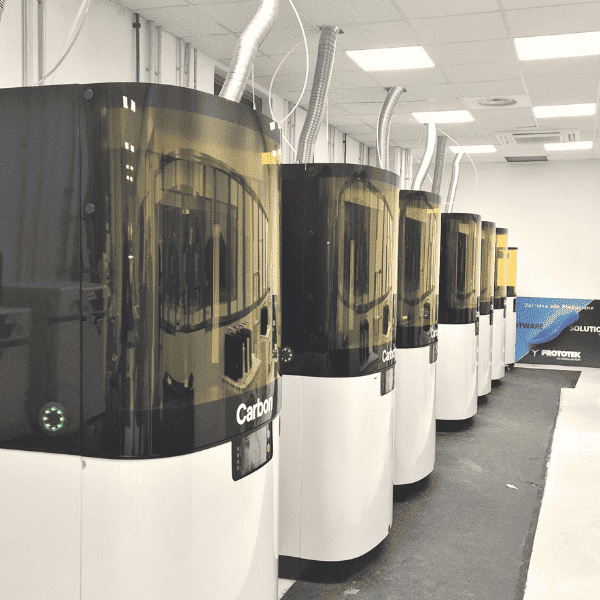
With a production fleet of seven Carbon systems and a dedicated HP Multi Jet Fusion laboratory operating 24 hours per day, five days per week, Prototek provides the manufacturing capacity necessary to support the transition from prototyping to scalable serial production.
This infrastructure enables:
Parallel production runs
Consistent mechanical repeatability
Controlled batch traceability
High throughput for industrial clients
The combination of Carbon DLS™ and HP MJF platforms ensures both high-performance material options and cost-efficient batch production.
Reducing Tooling Costs and Accelerating Time-to-Market
Injection mold development requires substantial upfront capital and long lead times. Design errors discovered after tooling fabrication can generate significant rework costs.
By integrating additive manufacturing into the production roadmap, companies can:
Delay or eliminate tooling investment
Validate real-market demand before mold fabrication
Shorten commercialization timelines
Enter the market earlier with bridge production
This phased approach reduces financial exposure while accelerating time-to-market.
To understand how industrial companies have successfully transitioned from prototyping to scalable production using rapid manufacturing, explore the success case studies of businesses that have chosen to rely on our 3D printing services.
Real-world applications demonstrate how additive manufacturing can reduce costs, accelerate development, and support sustainable, on-demand production strategies.
For many manufacturers, 3D printing and rapid prototyping are no longer a preliminary step before “traditional production.” They represent a mature, flexible, and scalable manufacturing model aligned with modern industrial demands.
How to Evaluate a 3D Printing Service as Partner
When selecting a provider, consider:
Material portfolio and certifications
Mechanical certification capabilities
Dimensional accuracy standards
Production scalability
Engineering support
- Quality Control and Project Security.
A technical partner such as Prototek can reduce risk by aligning process parameters with final application requirements.
FAQs – 3D Printing and Rapid Prototyping
Q1. What is the difference between 3D printing and rapid prototyping?
3D printing refers to the additive manufacturing process itself, while rapid prototyping is the application of that technology to quickly create and test product concepts.
Q2: Is 3D printing suitable for functional mechanical parts?
Yes. With technologies like Carbon DLS and HP Multi Jet Fusion, parts can achieve high strength, thermal resistance, and durability.
Q3: When is additive manufacturing more cost-effective than injection molding?
Typically in low-volume production (from 1 to a few thousand units), where tooling costs would otherwise dominate.
Q4: Can 3D printing replace traditional manufacturing?
It complements rather than replaces traditional methods. It is especially effective for prototyping, customization, and short-run production.
Q5: How fast can industrial rapid prototyping be delivered in Europe?
Lead times vary, but many industrial services provide functional parts within a few days, depending on complexity and volume.
Conclusion
3D printing and rapid prototyping are no longer experimental technologies—they are operational and strategic tools for industrial competitiveness.
For European manufacturers seeking faster validation cycles, reduced risk, and scalable innovation, additive manufacturing represents a strategic investment.
With advanced platforms like Carbon DLS™ and HP Multi Jet Fusion and specialized service providers such as Prototek, companies can move from concept to functional production with speed, precision, and cost control.